
 Features
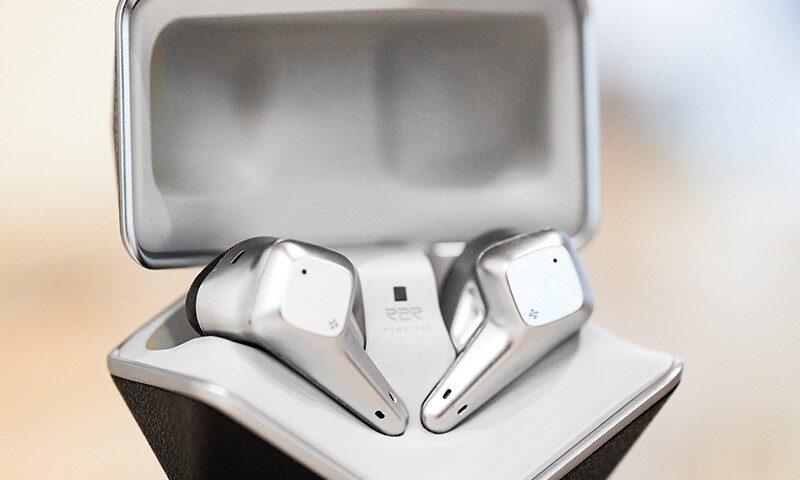
• HIFIMAN SVANAR Wireless 2 has officially launched, becoming the first non-Huawei L2HC-certified true wireless earbuds
• Upgraded to Bluetooth 6.0 + L2HC adaptive high-definition codec (320–960 kbps), with simultaneous LDAC compatibility for cross-platform hi-res Bluetooth
• The 1st-gen SVANAR Wireless pioneered the Hi-Fi TWS route with its Topology Diaphragm + built-in HYMALAYA R2R DAC
• 1st-gen originally priced at $499 USD — now on clearance at just $149 USD (~HK$1,170)
• 💰 2nd-gen pricing and release date await official announcement
• ⭐ Kaia’s Take: HIFIMAN is betting on the L2HC camp — a major strategic statement in the TWS Hi-Fi space. But the question remains: how many people outside Huawei’s ecosystem actually use L2HC?
📑 Table of Contents
- HIFIMAN: The Technical DNA of a Hi-Fi “Little Giant”
- Where SVANAR Wireless Sits in the Lineup
- 1st-Gen Recap: SVANAR Wireless (2023) — The Hi-Fi TWS Trailblazer
- 2nd-Gen Outlook: SVANAR Wireless 2 (2026) — A Strategic Pledge to the L2HC Camp
- SVANAR Wireless 1st-Gen Spec Recap
- Kaia’s Take: Is L2HC a Smart Bet or an Ecosystem Gamble?
- Pros & Cons
- Who Is It For?
- FAQ
- Verdict

🏭 HIFIMAN: The Technical DNA of a Hi-Fi “Little Giant”
HIFIMAN is one of the few Chinese audio brands recognised as a national-level “Little Giant” — a designation for specialised, high-end manufacturing enterprises. Unlike typical consumer electronics companies, HIFIMAN builds its moat with proprietary core technologies — from the HYMALAYA R2R DAC chip to the Topology Diaphragm, both developed in-house from the ground up. In 2025, R&D spending reached ¥11.92 million RMB, maintaining roughly a 5% R&D-to-revenue ratio, with a cumulative total of 202 patents (86 of which are invention patents).
The brand’s market structure also reflects its high-end positioning: overseas revenue accounts for over 60% of total sales, with products well-received in mature markets across North America and Europe. 2025 revenue hit ¥239 million RMB, and gross margins have consistently stayed above 65% — a figure that sits at the very top of the audio hardware industry.
HIFIMAN’s core strategy has always been “trickle-down” — taking wired Hi-Fi technology and adapting it for wireless products. From flagship planar magnetic headphones, to portable players, to true wireless earbuds, the brand’s technical trajectory is clear: prove engineering prowess in the high-end wired market first, then miniaturise and wireless-ify the key technologies.
⚙️ Where SVANAR Wireless Sits in the Lineup
The name SVANAR originates from HIFIMAN’s flagship wired in-ear monitor, the SVANAR (meaning “swan” in Swedish, inspired by the Pärluggt swan), which serves as the brand’s acoustic benchmark. Extending the SVANAR name to the Wireless series is itself a statement: HIFIMAN believes true wireless earbuds have earned the right to bear a flagship moniker.
Within HIFIMAN’s TWS product line, SVANAR Wireless occupies the top tier — with models like the TWS450 ($39 USD) and TWS600 filling out the entry-to-mid-range below it. SVANAR Wireless’s mission isn’t volume; it’s about demonstrating that wired Hi-Fi acoustic principles can be transplanted intact into a true wireless platform. The 2nd-gen release pushes this even further, extending the competitive arena from “sound quality” into the realm of “wireless transmission protocols.”
🔧 1st-Gen Recap: SVANAR Wireless (2023) — The Hi-Fi TWS Trailblazer
When the first-generation SVANAR Wireless launched in 2023, it was a genuine outlier in the TWS market. At a time when most brands were locked in a battle over ANC depth and call quality, HIFIMAN went ahead and stuffed core wired Hi-Fi technology straight into a pair of true wireless earbuds:
- Topology Diaphragm: Derived from the flagship wired SVANAR, this nanometer-scale diaphragm technology applies specially patterned nano-coatings to the diaphragm surface for precise acoustic tuning. It’s HIFIMAN’s signature technology — and practically unheard of in the TWS space.
- Built-in HYMALAYA R2R DAC Chip: TWS earbuds typically rely on the phone’s DAC; SVANAR Wireless is one of the rare few with a built-in, self-developed R2R DAC — meaning the earbuds convert digital to analogue internally using an R2R architecture. R2R is prized for its natural, organic, “analogue-like” presentation, distinct from the “accurate but clinical” sound of mainstream Delta-Sigma chips.
- Active Noise Cancellation (ANC): Supports ANC, striking a balance between Hi-Fi sound quality and everyday practicality.
- Bluetooth 5.2 + LDAC: Supports Sony’s LDAC high-resolution Bluetooth codec, up to 990kbps.
- Battery life ~7 hours (ANC on), ~28 hours with case, IPX4 water resistance.
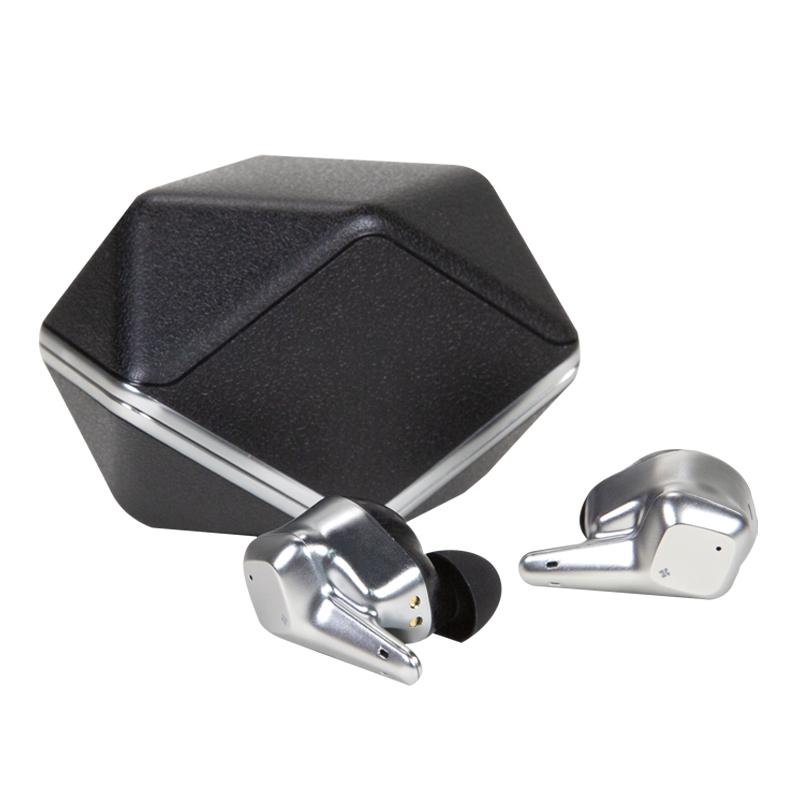
On pricing: the 1st-gen SVANAR Wireless originally retailed at $499 USD (¥3,299 CNY), firmly in the ultra-premium TWS segment. However, with the 2nd-gen launch on the horizon, HIFIMAN’s official store has slashed the 1st-gen clearance price to $149 USD (¥1,039 CNY, ~HK$1,170) — dropping from nearly five thousand Hong Kong dollars to just over a thousand, a clear signal that the 2nd-gen is imminent.
Market reception to the 1st-gen was notably polarised: sound quality earned widespread acclaim — the combination of R2R analogue tonality and Topology Diaphragm resolution was widely regarded as top-tier among TWS at the time. But ANC performance and wearing comfort drew criticism, particularly the relatively large earbud size and hefty charging case, which made daily use less convenient than some would like.
🔧 2nd-Gen Outlook: SVANAR Wireless 2 (2026) — A Strategic Pledge to the L2HC Camp
On 28 May 2026, HIFIMAN officially unveiled the SVANAR Wireless 2 at its Kunshan Summer Product Launch event. Also announced were the HM2000 Audio Centre and the HE6 REMASTERED — a classic planar headphone reissue — but the SVANAR Wireless 2’s technical announcement was by far the most headline-worthy.
The 2nd-gen’s core upgrades revolve around wireless transmission protocols:
- 🔥 World’s first non-Huawei L2HC-certified TWS: L2HC is Huawei’s high-definition Bluetooth audio codec standard, supporting adaptive bitrate (320–960 kbps). HIFIMAN becoming the first brand outside Huawei to receive L2HC certification is significant — it signals HIFIMAN’s formal entry into Huawei’s hi-res audio ecosystem.
- Bluetooth 6.0: A leap from the 1st-gen’s BT 5.2 to the latest BT 6.0, promising more stable connectivity, lower latency, and improved multi-device switching.
- Cross-platform compatibility: L2HC works with HarmonyOS and Android, while LDAC support is retained — meaning whether you’re on a Huawei, Samsung, Sony, or any other Android phone, you’ll have a hi-res codec available.
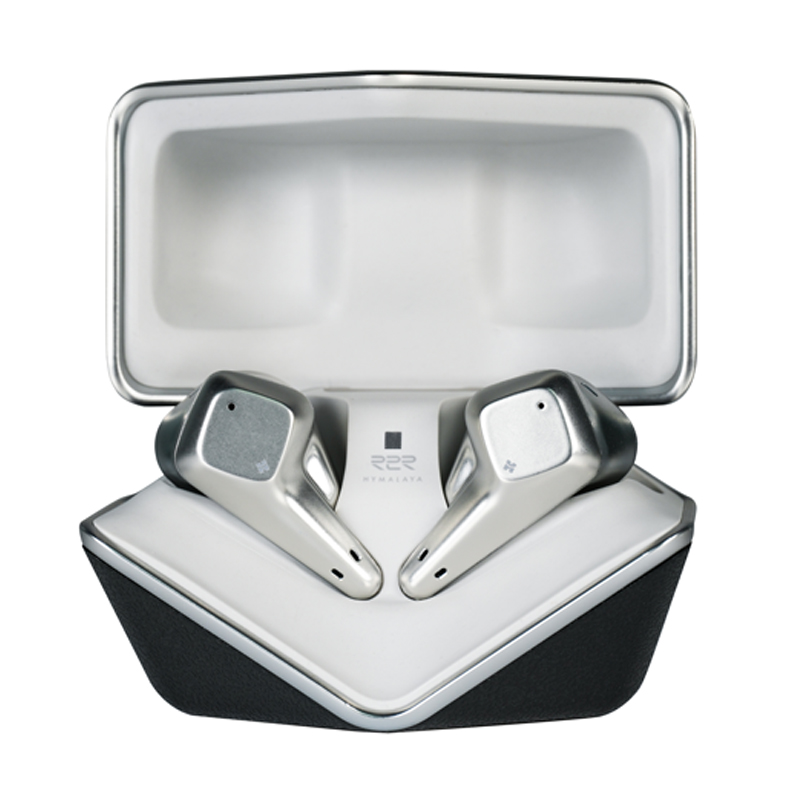
That said, the officially disclosed 2nd-gen information remains limited. Here’s what we know — and what we don’t:
📋 SVANAR Wireless 1st-Gen Spec Recap
| Bluetooth Version | 5.2 |
| Hi-Res Codec | LDAC |
| DAC Chip | HYMALAYA R2R (in-house) |
| Diaphragm Tech | Topology Diaphragm |
| Active Noise Cancellation | Yes |
| Battery Life (earbuds) | ~7 hrs (ANC on) |
| Battery Life (with case) | ~28 hrs |
| Water Resistance | IPX4 |
| Price (MSRP) | $499 USD / ¥3,299 CNY (~HK$3,900) |
| Price (Clearance) | $149 USD / ¥1,039 CNY (~HK$1,170) |
| Release Year | 2023 |
💡 Kaia’s Take: Is L2HC a Smart Bet or an Ecosystem Gamble?
As a product designer, I find the L2HC decision on the SVANAR Wireless 2 genuinely fascinating — less a technical upgrade, more a strategic declaration.
Right now, the hi-res Bluetooth codec market for TWS is essentially Sony’s LDAC ruling unchallenged. Qualcomm’s aptX Lossless has Snapdragon platform requirements, limiting its ecosystem. L2HC, as a Huawei-led standard, has one major advantage: open certification — Huawei is willing to let third-party brands use it, unlike Sony’s more tightly controlled approach (LDAC is technically open, but codec optimisation and certification remain under Sony’s grip).
HIFIMAN choosing L2HC likely involves several calculations: (1) Huawei phones command a massive market share in China — L2HC’s actual domestic user base could easily surpass LDAC’s; (2) while L2HC’s 320–960 kbps adaptive bitrate numerically trails LDAC’s 990kbps, Bluetooth bandwidth is the bottleneck for TWS anyway, and L2HC’s coding efficiency may actually be better suited to true wireless scenarios; (3) HIFIMAN doesn’t want to be locked into a single codec standard — supporting both L2HC and LDAC hedges their bets and maximises Android compatibility.
The risk is equally clear: L2HC’s ecosystem is, for now, centred on Huawei devices. The codec’s reach beyond HarmonyOS — on broader Android or, eventually, in international markets — remains unproven. HIFIMAN is essentially betting real product strategy on the growth of Huawei’s audio ecosystem. Viewed from a product designer’s lens, it’s a high-reward, high-risk move — if Huawei’s ecosystem expands as hoped, HIFIMAN secures early-mover advantage; if not, you’ve added a codec that most of your users can’t access.
Smart bet or ecosystem gamble? Ask me again in 2028.
✅❌ Pros & Cons
| ✅ Pros | ❌ Cons |
|---|---|
| Built-in HYMALAYA R2R DAC — genuine Hi-Fi architecture in a TWS | 2nd-gen full specs, pricing, and release date still unannounced |
| Topology Diaphragm tech — near-zero competition in TWS space | L2HC ecosystem limited — iPhone users locked to AAC |
| BT 6.0 + simultaneous L2HC & LDAC — best-in-class codec flexibility | Larger earbud size and heavier case — daily portability takes a hit |
| 1st-gen now $149 USD clearance — staggering value for R2R + LDAC TWS | ANC performance lags behind Sony / Bose class leaders |
| First non-Huawei L2HC certification — early-mover advantage | Limited retail availability in Hong Kong — mostly direct from official store |
🎯 Who Is It For?
| 👍 You’ll Love It If… | 👎 Look Elsewhere If… |
|---|---|
| You’re a Hi-Fi enthusiast curious about how R2R DAC sounds in a TWS | You primarily use an iPhone (no LDAC or L2HC — stuck at AAC) |
| You use a Huawei or Android phone and want the fullest codec support | Top-tier ANC and compact form factor are your priorities |
| You value natural, organic tonality over clinical analytical precision | You need something that easily fits in a jeans pocket |
| You want a bargain: 1st-gen at $149 USD is a Hi-Fi TWS steal | You want the latest and greatest — wait for 2nd-gen full reveal |
❓ FAQ
🔹 When does the SVANAR Wireless 2 launch? What’s the price?
HIFIMAN has not yet announced an official release date or pricing for the SVANAR Wireless 2. The 1st-gen originally retailed at $499 USD (~HK$3,900) and is currently on clearance at $149 USD (~HK$1,170) via the official store. The 2nd-gen price can be estimated within this range, but the final figure is subject to official announcement.
🔹 What is L2HC and how does it compare to LDAC?
L2HC is Huawei’s high-definition Bluetooth audio codec standard, supporting adaptive bitrate (320–960 kbps) and primarily targeting HarmonyOS and Android systems. LDAC, developed by Sony, supports up to 990 kbps. Both are hi-res Bluetooth solutions, but L2HC’s ecosystem centres on Huawei phones, while LDAC enjoys broader support across Android brands. The SVANAR Wireless 2 supports both codecs for maximum compatibility.
🔹 Is the 1st-gen SVANAR Wireless still worth buying?
If you prioritise top-tier sound quality in a TWS, the 1st-gen at its current $149 USD (~HK$1,170) clearance price is an exceptional deal. The combination of a built-in HYMALAYA R2R DAC and Topology Diaphragm is almost unrivalled at this price point. Caveats: ANC performance is middling, the earbuds are on the larger side, and Bluetooth is capped at 5.2. If you can live with those trade-offs, it’s one of the best-value Hi-Fi TWS options available.
🔹 Can iPhone users use the SVANAR Wireless?
Yes, but iPhones only support the AAC Bluetooth codec — neither LDAC nor L2HC hi-res transmission is available. This means the R2R DAC and hi-res codec advantages are significantly diminished on iOS. The earbuds will still use the internal R2R DAC for conversion, but the Bluetooth stream is limited to AAC quality. Android users are recommended for getting the most out of these earbuds.
🔹 Where can I buy HIFIMAN SVANAR Wireless in Hong Kong?
HIFIMAN primarily sells via its international official store (store.hifiman.com), which accepts Hong Kong orders. Local brick-and-mortar retail availability in Hong Kong is limited. Interested buyers should check HIFIMAN’s official Dealer page for the latest authorised retailer information, or order directly from the official store.
📖 Further Reading
🏁 Verdict
On the surface, the SVANAR Wireless 2 looks like a routine generational refresh for a TWS. But dig a layer deeper, and the strategic weight of the L2HC certification far outweighs the technical upgrade itself — HIFIMAN becoming the first non-Huawei brand to join the L2HC camp signals that the hi-res Bluetooth codec market finally has a genuine “second path.” For consumers, more choice is always a good thing. The question is whether L2HC can break out of Huawei’s ecosystem and become a true cross-brand standard — only time will tell.
As for the SVANAR Wireless 1st-gen — if you’ve been curious about what an R2R DAC sounds like in a TWS form factor, the current $149 USD clearance price might just be the best entry point. Once the 2nd-gen ships, R2R TWS at this price could well become a thing of the past.
Bottom line: HIFIMAN has chosen the L2HC path, placing its bet on Huawei’s ecosystem. Whether that’s a shrewd move or an overreach depends on which camp you’re standing in.
🔗 More Info
📰 Launch event coverage: Securities Times — HIFIMAN Unveils Three New Products: Hi-Fi “Little Giant” Drives Wireless Audio Revolution With Core Technology
🛒 Official store: HIFIMAN Store — SVANAR Wireless (1st-gen)
📋 Product page: HIFIMAN CN — SVANAR Wireless