 Features
📌 TL;DR
- After just one hour of wearing in-ear monitors, bacteria on eartips can multiply up to 700× — this isnʼt an urban legend, but a finding backed by multiple studies.
- A 2025 study published in Scientific Reports (Nature) found that nearly 20% of earphone samples cultured pathogenic bacteria, with shared earphone use significantly increasing the risk of ear canal infections.
- Foam eartips should be replaced every 2–3 months; silicone eartips last longer, but replace them when you notice deformation, discolouration, or loss of seal.
- The market now offers eartips with antibacterial technology — standout options include Eletech Baroque (PureShield™ coating), Soundcocoon (food-grade antibacterial liquid silicone), and AZLA SednaEarfit Origin (medical-grade silicone).
- Replacing eartips costs far less than treating an ear infection. Starting from ~US$11, itʼs an investment in better hygiene, more consistent fit, and potentially more enjoyable sound.
Table of Contents
- Whatʼs on Your Eartips?
- How Often Should You Replace Eartips?
- Antibacterial Eartips: A Closer Look
- Side-by-Side Comparison: Five Eartips at a Glance
- Kaiaʼs Take: Antibacterial — The Future or a Gimmick?
- FAQ
Whatʼs on Your Eartips?
An in-ear monitor is, by design, a sealed plug — it blocks the ear canal, creating a warm, moist, dark space. That environment happens to be exactly what bacteria and fungi love most.
The most widely cited figure on earphone bacteria — “700× bacterial growth after one hour of use” — originates from research at the University of Arizona and has been reported across multiple English-language and Chinese health media outlets. Japanese otolaryngologist Dr Ōkawara has also warned in his column that daily IEM use exceeding one hour significantly raises the risk of otitis externa.

In 2025, Qassim University in Saudi Arabia published a more rigorous cross-sectional study in Scientific Reports, a Nature journal. Researchers collected samples from 50 participantsʼ earphones for bacterial culture and found that 16% of female and 24% of male samples tested positive for bacteria. Notably, no fungi were detected — though this doesnʼt rule out fungal infection risk with prolonged use, especially in high-humidity environments like Hong Kong.
The study also revealed a key risk factor: sharing earphones. Statistical analysis showed a significant association between sharing earphones and the presence of ear canal symptoms. The most common symptoms included itching, ear pain, excessive earwax, and tinnitus.
In Hong Kong, the hot and humid summer months make things worse. The sealed environment created by IEMs can easily trigger “Hong Kong ear” — otomycosis (fungal otitis externa), characterised by persistent itching, increased discharge, and a notoriously long treatment cycle. Local distributor ECT has published a detailed breakdown of ear canal inflammation causes on its blog, noting that many users go a month — or never — without cleaning their eartips, dramatically increasing the risk of infection.
How Often Should You Replace Eartips?
The answer depends on the material.
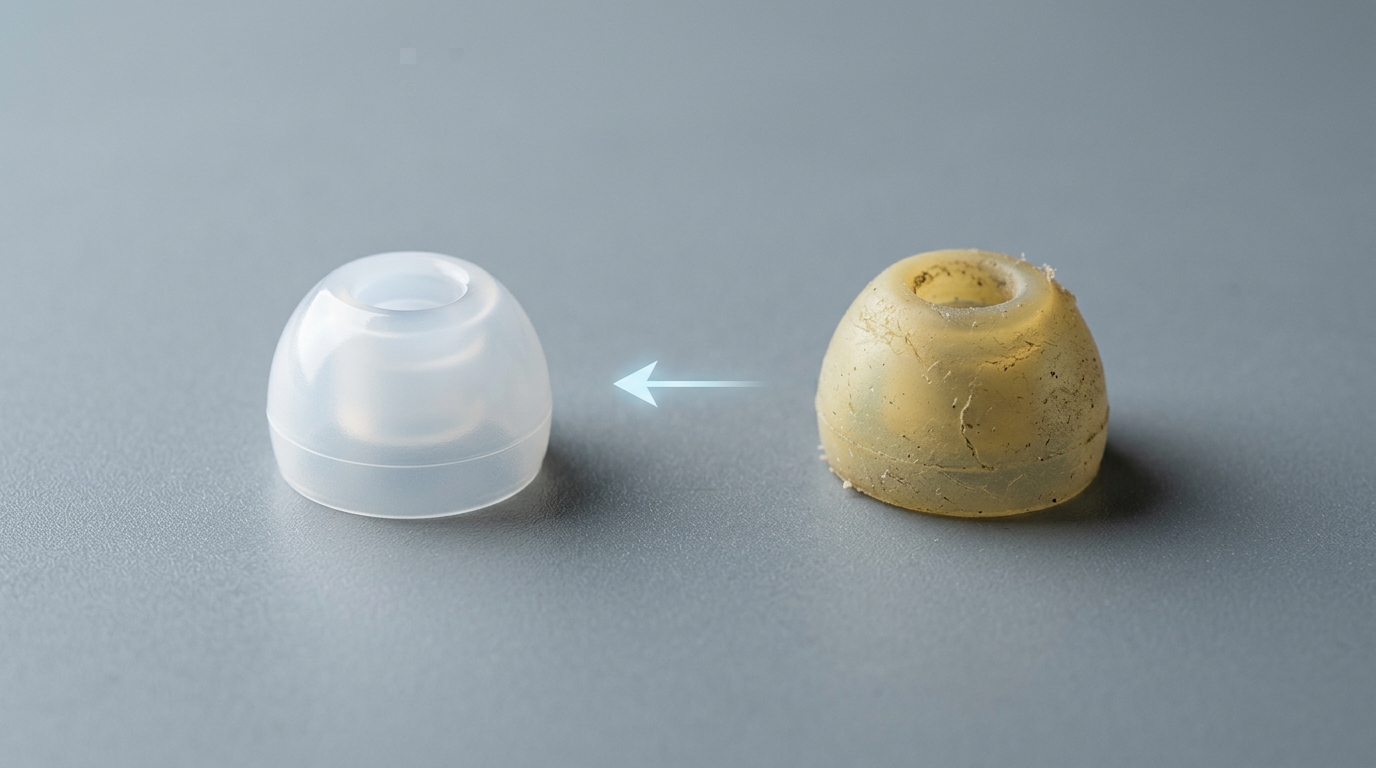
Foam eartips (memory foam): every 2–3 months. Comply Foam officially recommends that standard foam eartips last roughly 2–3 months under normal use. Their TrueGrip MAX series, with a more durable formulation, lasts roughly twice as long — about 4–6 months. The micro-porous structure of foam eartips readily absorbs earwax, oils, and moisture; even when they look intact, hygiene deteriorates rapidly over time.
Silicone eartips: no fixed replacement schedule, but replace when these signs appear. The sealed surface of silicone is more resistant to grime than foam, but prolonged use leads to deformation, loss of elasticity, yellowing, or a tacky feel. If the fit becomes less secure, isolation drops, or the eartip no longer returns to its original shape, itʼs time for a new pair. As a conservative estimate, replacing daily-use silicone eartips every 3–6 months is reasonable.
Regardless of material, regular cleaning is the key to extending eartip life: wash eartips weekly with lukewarm water and a small amount of mild soap, then dry completely before use. Avoid alcohol — it accelerates the ageing of both silicone and foam.
Antibacterial Eartips: A Closer Look
Given that eartips are a breeding ground for bacteria, itʼs no surprise that antibacterial products have emerged. Below are five of the more notable options available in the Hong Kong market today, analysed across antibacterial technology, sound character, and price.
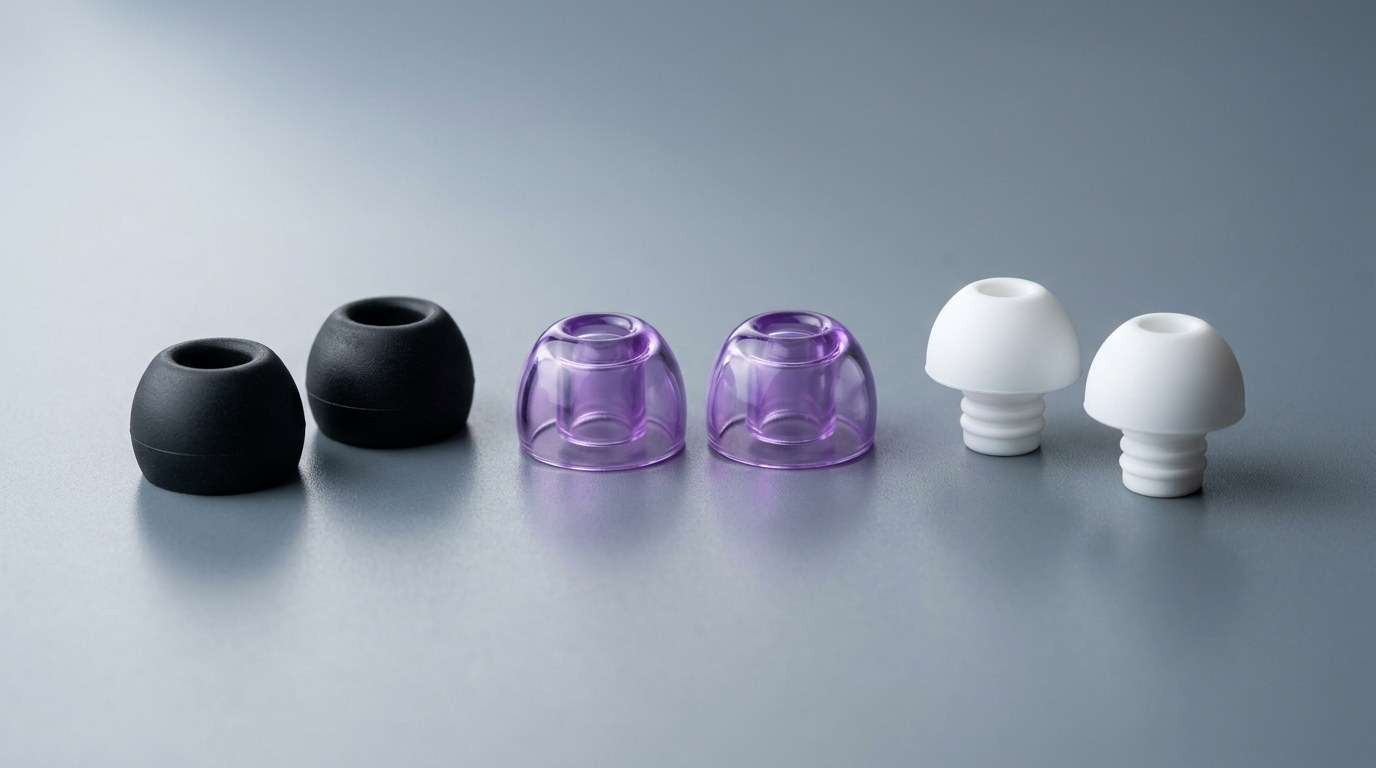
1. Eletech Baroque — The PureShield™ Pioneer
Singapore brand Eletechʼs Baroque series is one of the most mature antibacterial eartip products on the market today. Developed over three years, Baroque uses Japanese medical-grade silicone as its base and adds the brandʼs proprietary PureShield™ antibacterial coating — a nano-scale protective film that inhibits bacterial growth while preventing yellowing, deformation, and cracking.
Sound character: Unlike most eartips that target bass or treble, Baroqueʼs tuning deliberately focuses on the midrange. Its wide-bore design delivers an open, airy soundstage, with a warm, textured lower midrange and a three-dimensional vocal presentation. The overall character leans “musical” rather than purely analytical. The signature Satiné textured surface also makes for a more comfortable fit.
Baroque comes in three variants: IEM version (HK$188 / two pairs), TWS version (HK$118 / two pairs), and AirPods Pro version (HK$158 / two pairs). The TWS version adds PureShield coating and shortens the eartip depth to fit charging cases.
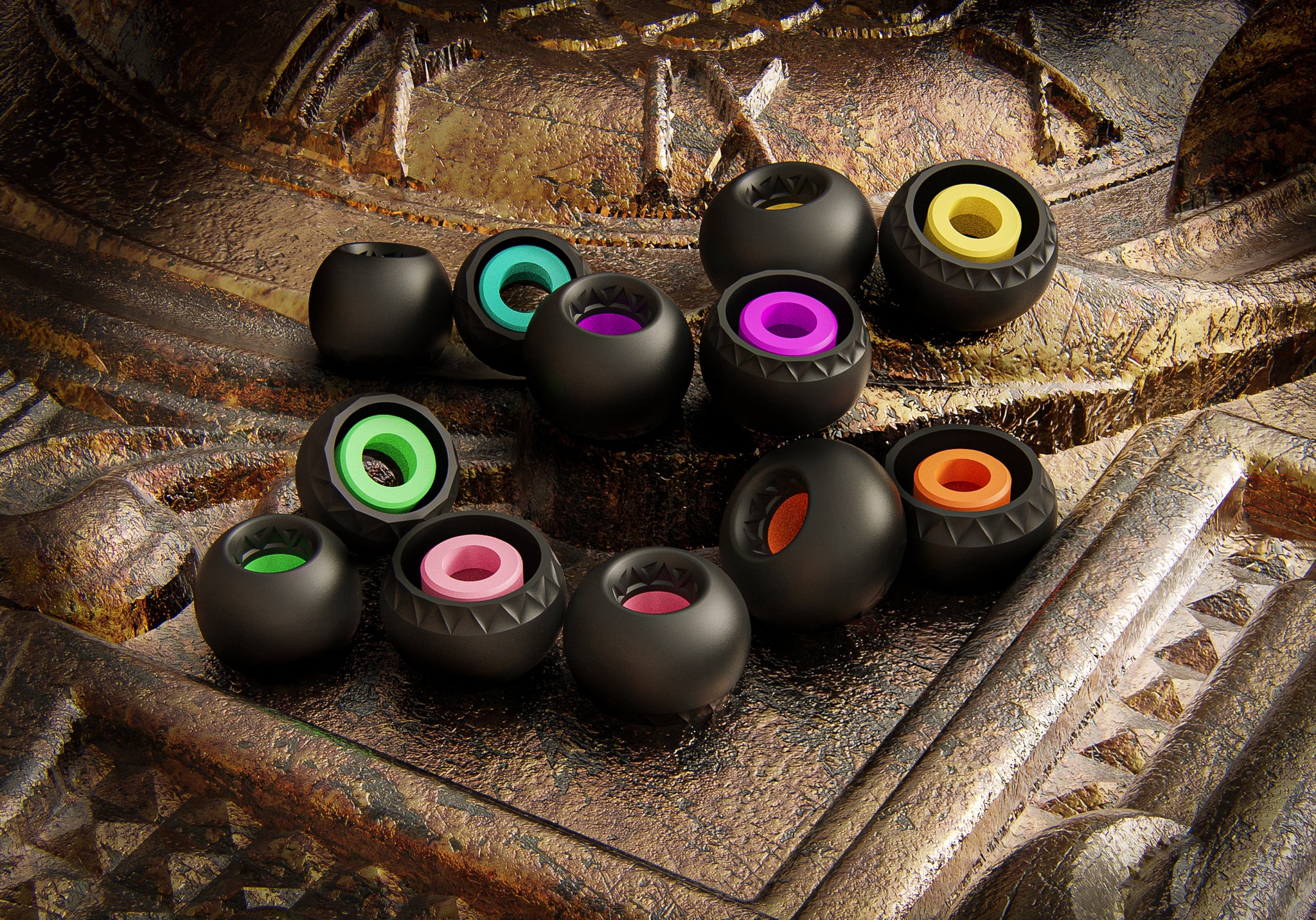
2. Soundcocoon — 100% Antibacterial Liquid Silicone
From Rose Technics (Roseselsa), Soundcocoon takes a different material approach: 100% food-grade antibacterial liquid silicone. Unlike surface coatings, Soundcocoonʼs antibacterial properties are built into the material itself — the high-transparency liquid silicone incorporates antibacterial characteristics during manufacturing, requiring no additional coating. This also means the antibacterial effect doesnʼt degrade with wear.
Sound character: Soundcocoon delivers the most prominent bass of the five. In AudioReviews.orgʼs eartip comparison, its low-end texture and impact were rated “among the best” — with just the right amount of tactility and note weight, without sounding bloated or loose. The treble is lively, the soundstage open, and the overall character is enthusiastic and energetic. The material is extremely soft, the seal is excellent, and isolation can reach an additional 5 dB.
A box of four pairs costs HK$129 — outstanding value.
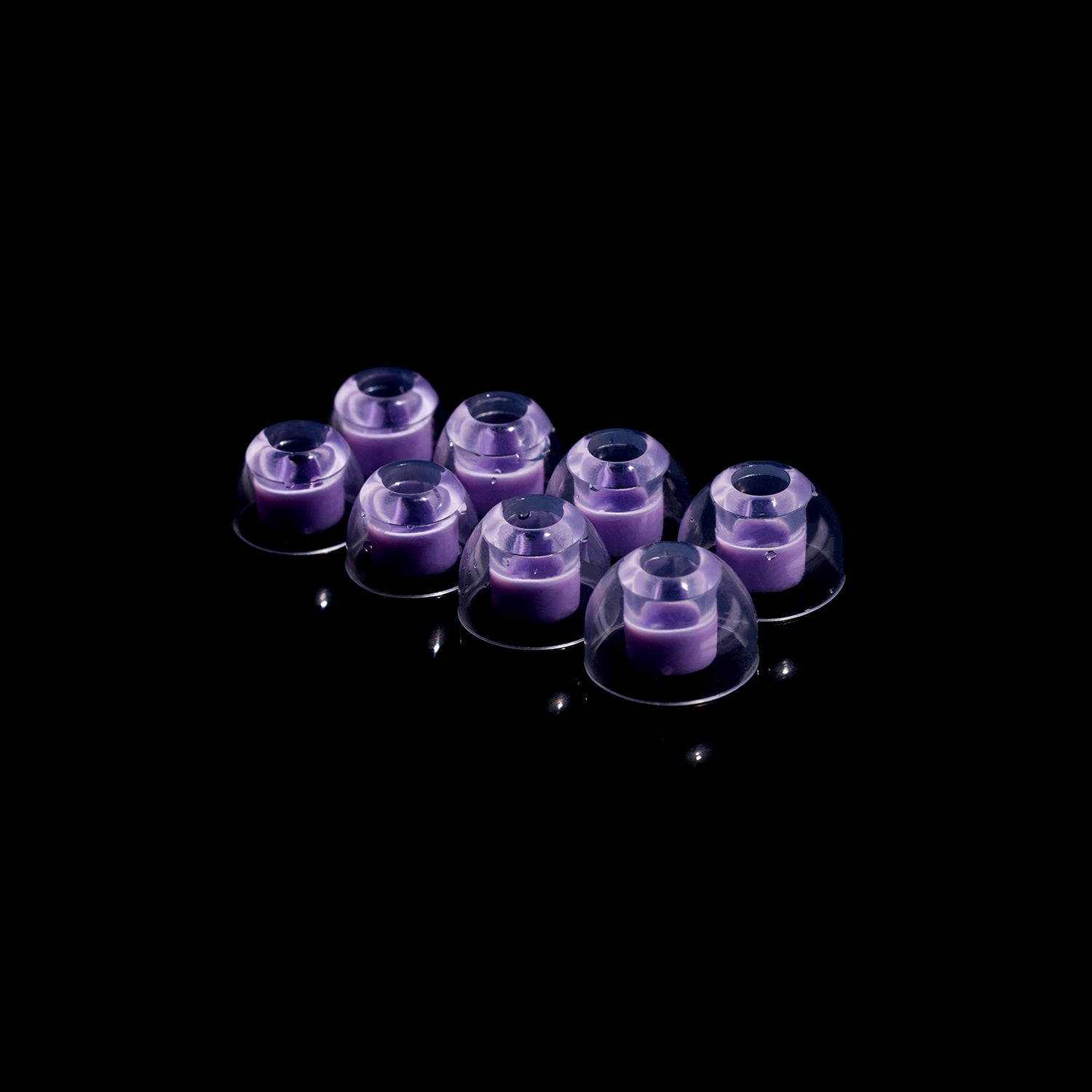
3. AZLA SednaEarfit Origin — Medical-Grade Reductionism
Korean brand AZLAʼs SednaEarfit Origin isnʼt marketed primarily as “antibacterial” — it uses medical-grade silicone, which is hypoallergenic and skin-friendly, making it a solid choice for users with sensitive skin. Its design philosophy is to change the sound as little as possible.
Sound character: Origin uses a straight-tube internal structure that reduces sound wave reflections and distortion within the bore, aiming to preserve the earphoneʼs original sonic character. In practice, it delivers a slightly warm-leaning neutrality — the wide bore brings a spacious soundstage and bright treble extension, while the bass remains clean and unexaggerated. If youʼre already happy with your earphoneʼs stock tuning and just want to upgrade comfort and hygiene, Origin is the ideal choice.
Hong Kong pricing: HK$153 (two pairs) or HK$80 (single pair).
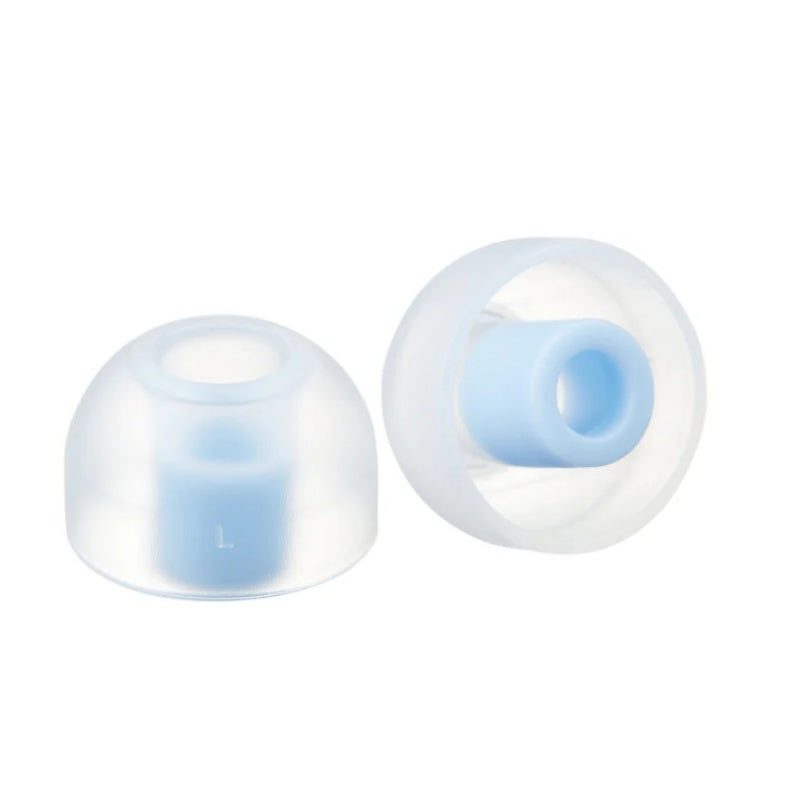
4. SpinFit Omni — The Neutral Baseline
SpinFit Omni is the only one of the five that doesnʼt explicitly claim antibacterial properties. Its selling points are the patented 360-degree swivel nozzle and hypoallergenic medical-grade silicone — the focus is on fit and comfort rather than hygiene technology.
Itʼs included in this article as a non-antibacterial reference point — knowing who has what makes for a more informed buying decision.
Sound character: Omni has the least impact on sound of the five. In Loud and Wirelessʼs review, when the eartip size matched the stock tips closely, Omni produced almost no change in frequency response, with only a slight attenuation of the extreme highs. Note, however, that if the eartip length differs significantly from the stock tips, a perceptible bass roll-off can occur. If youʼre looking for an eartip that “sounds like stock, but feels better,” Omni is the safest bet.
Hong Kong pricing: HK$88 (two pairs).
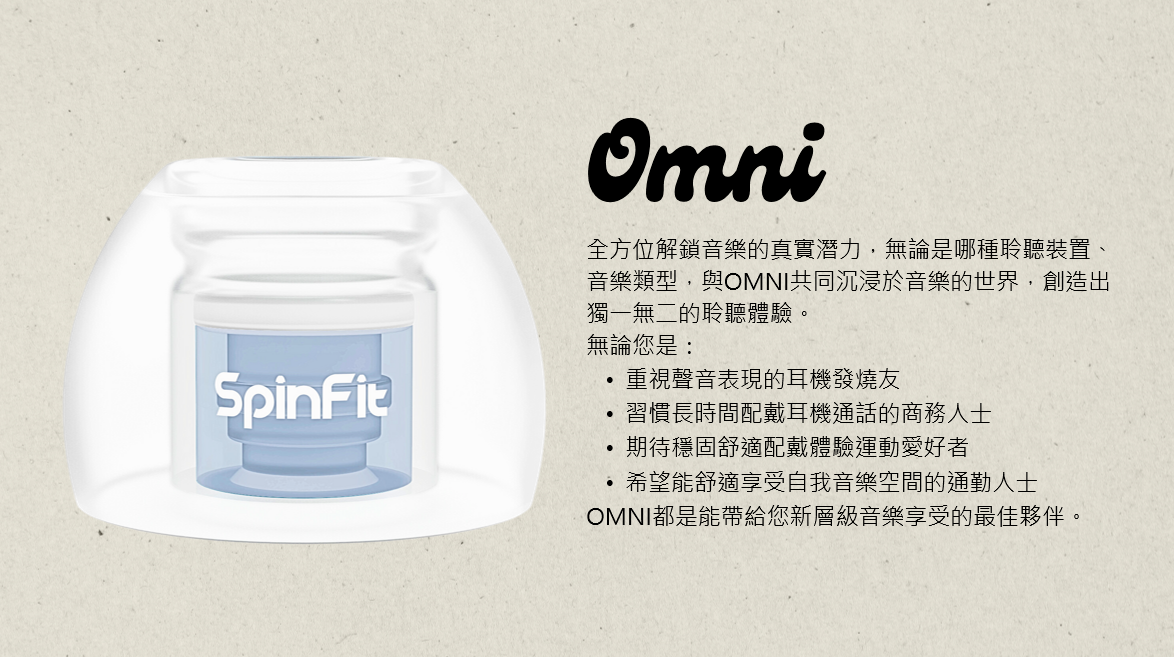
Side-by-Side Comparison: Five Eartips at a Glance
| Product | Antibacterial Tech | Material | Sound Character | Price (HKD) |
|---|---|---|---|---|
| Eletech Baroque | PureShield™ antibacterial coating | Japanese medical-grade silicone | Midrange-focused, warm, airy | $188 (IEM) / $118 (TWS) |
| Soundcocoon | 100% antibacterial liquid silicone | Food-grade liquid silicone | Bass-enhanced, lively, open soundstage | $129 (4 pairs) |
| AZLA Origin | Medical-grade silicone (hypoallergenic) | Medical-grade silicone | Transparent, warm tilt, wide soundstage | $153 (2 pairs) |
| SpinFit Omni | — (no antibacterial claim) | Hypoallergenic medical-grade silicone | Most neutral, minimal impact, slight treble attenuation | $88 (2 pairs) |
Kaiaʼs Take: Antibacterial — The Future or a Gimmick?
The antibacterial eartip category is still in its very early days. Only two or three brands have invested in genuine antibacterial R&D; most products still rely on vague terms like “hypoallergenic” or “medical-grade” as selling points.
But calling antibacterial tech a pure gimmick isnʼt entirely fair, either. PureShield™ coating and food-grade antibacterial liquid silicone both have a basis in materials science — the former is an extension of surface treatment technology, the latter involves chemical modification of the material itself. The real problem is that consumers currently have no way to independently verify the actual effectiveness of these technologies. There are no third-party studies comparing “how much less bacteria grows on antibacterial eartips vs regular ones after three months.”
This trajectory reminds me of something similar: a few years ago, antibacterial phone cases were dismissed as a gimmick — today theyʼre standard in medical settings. The antibacterial path for eartips may need the same amount of time and more independent data to be validated.
Here in 2026, hereʼs my advice: if you already need to replace your eartips — whether because the old ones have deformed, or you want to try a different sound signature — then choosing one with antibacterial tech is a reasonable insurance policy. The premium (roughly HK$188 for Baroque, HK$129 for Soundcocoon) is modest compared to the medical bills and discomfort of an ear infection. But if your current eartips are in good shape and fit comfortably, switching purely for the “antibacterial” label isnʼt really necessary.
Ultimately, regular cleaning and replacement are the true foundations of eartip hygiene. Antibacterial technology is a bonus, not a substitute.
FAQ
Q1: Do eartips need daily cleaning?
No — daily cleaning isnʼt necessary. But wash them weekly with lukewarm water and a small amount of mild soap, then dry thoroughly before re-use. Avoid alcohol, which accelerates material ageing.
Q2: Which is more hygienic, silicone or foam eartips?
Silicone eartips have a sealed surface that resists grime better, giving them a slight hygiene edge over foam. But foam eartips often deliver better isolation and fit. If you live in a high-humidity region like Hong Kong, silicone may be the safer daily choice.
Q3: Do antibacterial eartips actually work? How long do they last?
Brand-level internal testing shows that PureShield™ coating and antibacterial liquid silicone can inhibit bacterial growth, but independent third-party comparative studies are currently lacking. The physical lifespan of antibacterial eartips is similar to regular silicone tips — 3–6 months is still the recommended replacement interval. Antibacterial doesnʼt mean permanently hygienic.
Q4: Will changing eartips alter the sound?
Yes — and the impact may be larger than you expect. Bore size, material hardness, length, and seal quality all influence frequency response and soundstage. As a general rule: wider bore = more treble and soundstage, narrower bore = more bass; harder material = more direct sound, softer material = smoother sound. Thatʼs why weʼve detailed each productʼs sound character above.
Q5: How do I know when itʼs time to replace my eartips?
Replace them when any of these four signs appear: ① the eartips turn yellow or feel tacky; ② the fit becomes loose and sound leaks more; ③ the material hardens or loses elasticity; ④ youʼve been using them for more than 6 months. If you exercise frequently or sweat heavily, replace them more often.
Sources:
Earphone use habits and their association with auditory and dermatologic complications — Scientific Reports (2025)
深入了解耳道發炎成因 論耳膠材質的重要性 — ECT
Review: Eletech Baroque Eartips — The Headphone List
Guide to IEM Silicone Eartips — AudioReviews.org
How Often Should You Replace Ear Tips? — Comply Foam
SoundCocoon Liquid Silicone Eartips — Roseselsa
SpinFit Omni Review — Loud and Wireless
How dirty are your headphones? — Boots Hearingcare