 Product News
Headfonics couldn’t tell the M3 Ultra apart from a solid-state amp in a blind test. That’s the most interesting thing about this product.
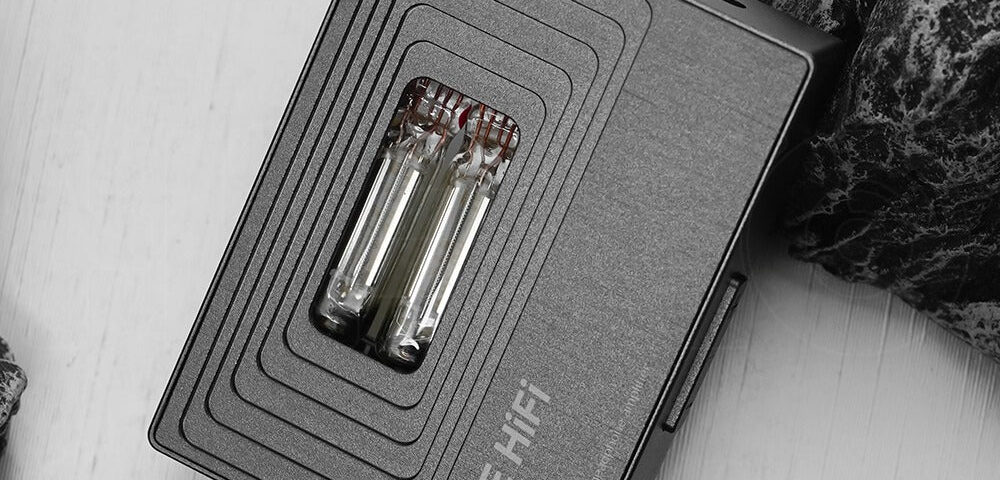
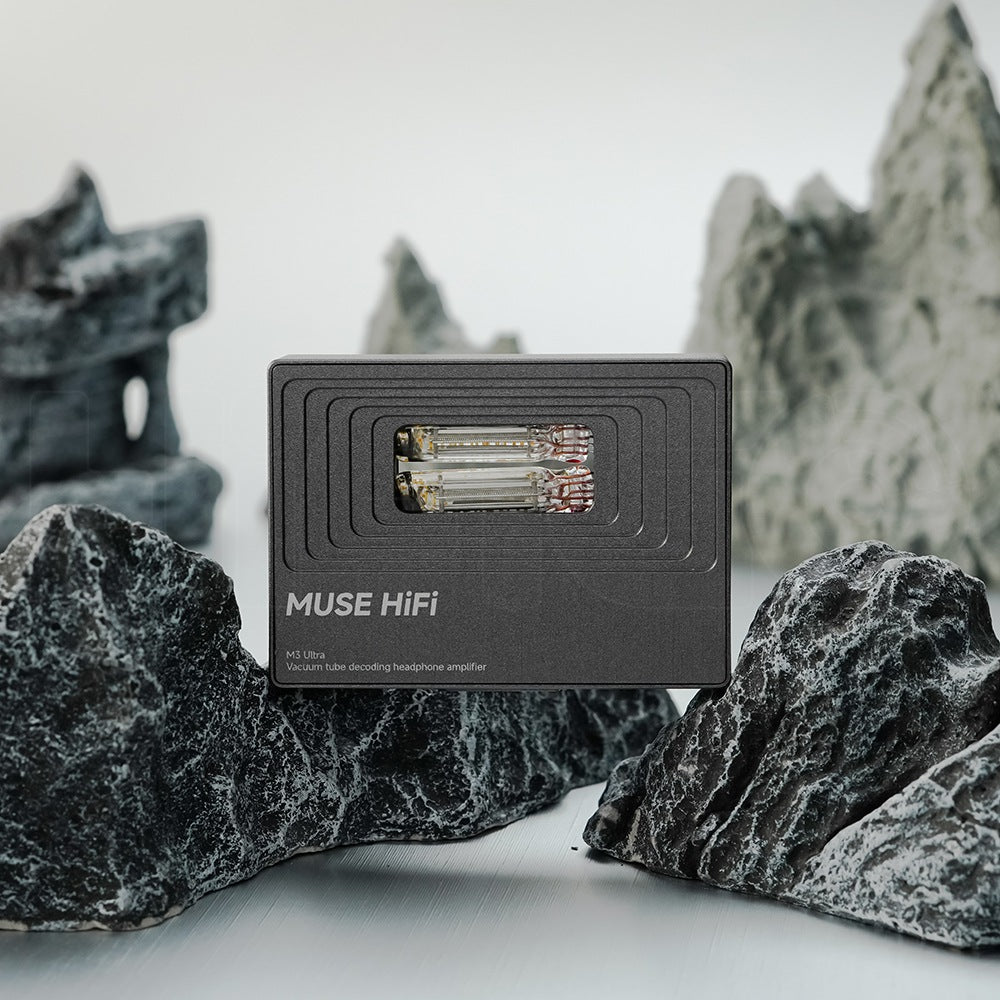
Muse HiFi just dropped the M3 Ultra — a US$109.99 (≈HK$858) portable DAC/amp packing an ESS ES9028Q2M DAC and a pair of genuine JAN6418 military-grade subminiature pentode tubes, with 3.5mm single-ended and 4.4mm balanced outputs. The first batch already sold out; the second ships June 20. At 55g and roughly thumb-drive-sized — getting two vacuum tubes into this form factor is, honestly, an engineering flex.
But flex aside. Headfonics’ Marcelo put it bluntly: “The M3 Ultra is coloration-free. It is hard to know whether I’m listening to a tube DAC amplifier when I’m blindfolded.” On a regular ESS dongle DAC review, that’s a compliment. On a vacuum tube amp review — it’s a paradox.
Muse HiFi built a triple anti-vibration system to miniaturise the JAN6418 for portable use: circuit-level compensation, algorithmic cancellation of microphonic effects, and a proprietary silicone physical dampener. Fair enough — vacuum tubes are extremely sensitive to vibration, and subminiature pentodes like the JAN6418 turn into microphonic noise generators the moment you jostle them without protection. To be clear: physical dampening (the silicone isolation) shouldn’t, in theory, alter the tube’s harmonic character — it’s purely mechanical isolation, reducing vibration-induced noise without touching the tube’s distortion profile. So the fact that Marcelo couldn’t distinguish tube from solid-state is more likely a consequence of the overall circuit design and tuning philosophy — Muse HiFi went for a deeply neutral, transparent voicing that keeps the tube’s colouration buried deep.
Audiophiles buy tube amps for a specific kind of “imperfect beauty”: second-harmonic warmth, natural high-frequency roll-off, subtle dynamic compression — not a measurement report clean enough to stick on an ESS chip datasheet. If you can’t hear the difference blind, what exactly are those two JAN6418s doing? A pretty glowing ornament?
I’m not saying the M3 Ultra is bad. US$110 for a genuine vacuum tube architecture in a portable form factor is genuinely aggressive. For comparison, the iBasso Nunchaku uses the same JAN6418 tubes at a notably higher price point. Muse HiFi has spent years building around the JAN6418 — the M5 Ultra (Bluetooth tube DAC), the M6 (dual tubes + IN-17 nixie display) — and they likely have deeper institutional knowledge of this tube than almost anyone. If any company can shrink a tube amp to 55g and keep it stable, Muse HiFi is a reasonable candidate.
Headfonics’ listening notes are actually quite positive: soundstage “among the best on portable DAC amplifiers,” excellent treble extension, bass with thickness but under control. Overall score 8.3/10. It’s just — “can’t tell it’s a tube” reframes every compliment into a deeper question.
So what is the M3 Ultra, in the end? A good portable DAC — that’s the baseline. A tube amp whose tube character you can’t reliably hear — that’s the paradox. A US$110 engineering experiment that proved you *can* cram vacuum tubes into a thumb-drive DAC, but never asked whether you *should* — that’s the philosophy.
If I ever get to blind-test one, the first question I want answered: can you actually hear those two JAN6418s?
| DAC Chip | ESS SABRE ES9028Q2M (32-bit) |
| Amp Chip | ESS ES9603Q |
| USB Chip | Savitech SA9137L (UAC 2.0) |
| Vacuum Tubes | Raytheon JAN6418 military-grade subminiature pentode ×2 |
| Decoding | PCM 32-bit/384kHz, DSD256 (Native) |
| Outputs | 3.5mm single-ended + 4.4mm balanced |
| Output Power (mfr claim) | 3.5mm: 460mW@32Ω / 4.4mm: 480mW@32Ω |
| THD+N (mfr claim) | 0.0003% |
| SNR (mfr claim) | 121dB |
| Anti-Vibration | Triple-layer: circuit compensation + algorithmic mic-effect cancellation + proprietary silicone physical dampening |
| Dimensions / Weight | 65 × 16 × 46.5 mm / 55g |
| Compatibility | iOS, Android, Windows, macOS (USB-C, UAC 2.0 plug-and-play) |
| Price | US$109.99 (≈HK$858) |
| Availability | First batch sold out; second batch estimated June 20, 2026 |
📌 Sources: Muse HiFi Official · Headfonics Review · HiFiGo · Head-Fi Thread