 Product News
• Noble Audio’s first tri-brid wireless over-ear headphones — Dynamic × Balanced Armature × Planar Magnetic, the brand’s wireless summit
• Audiodo Personal Sound with personalised hearing calibration — not your standard EQ
• 50+ hour battery life (ANC off), 600mAh user-replaceable battery, IP52 dust and splash resistance
• Qualcomm QCC3095 platform, Bluetooth 5.4, ANC + Transparency Mode, multipoint connectivity
• 💰 US$899 (approx. HK$7,020)
📑 Table of Contents
🎧 Noble’s Wireless Summit
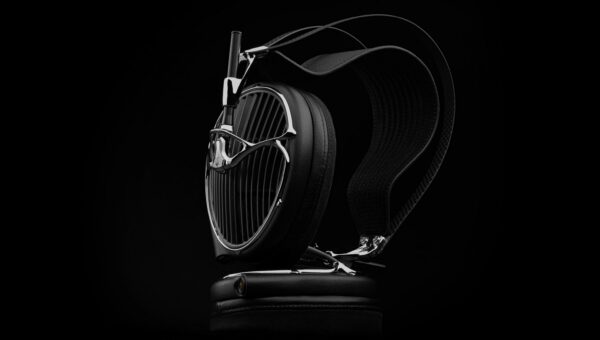
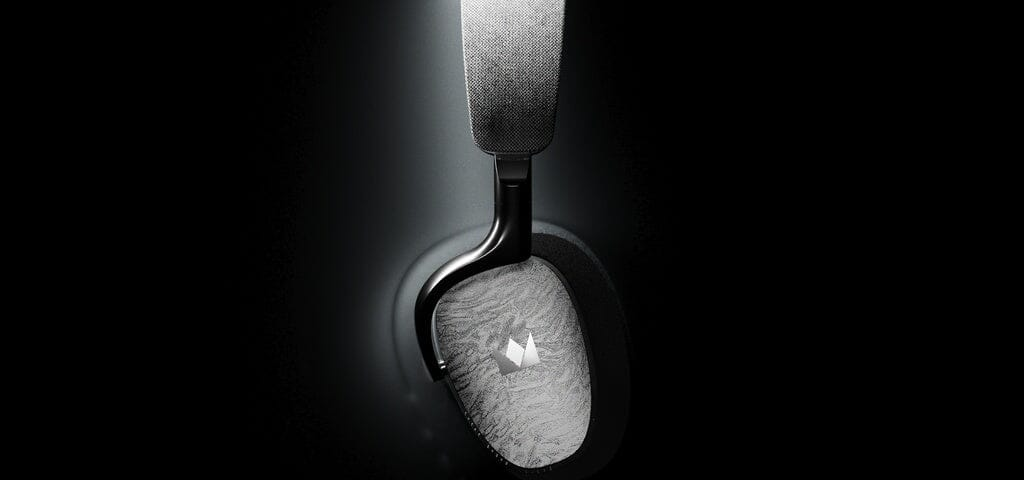
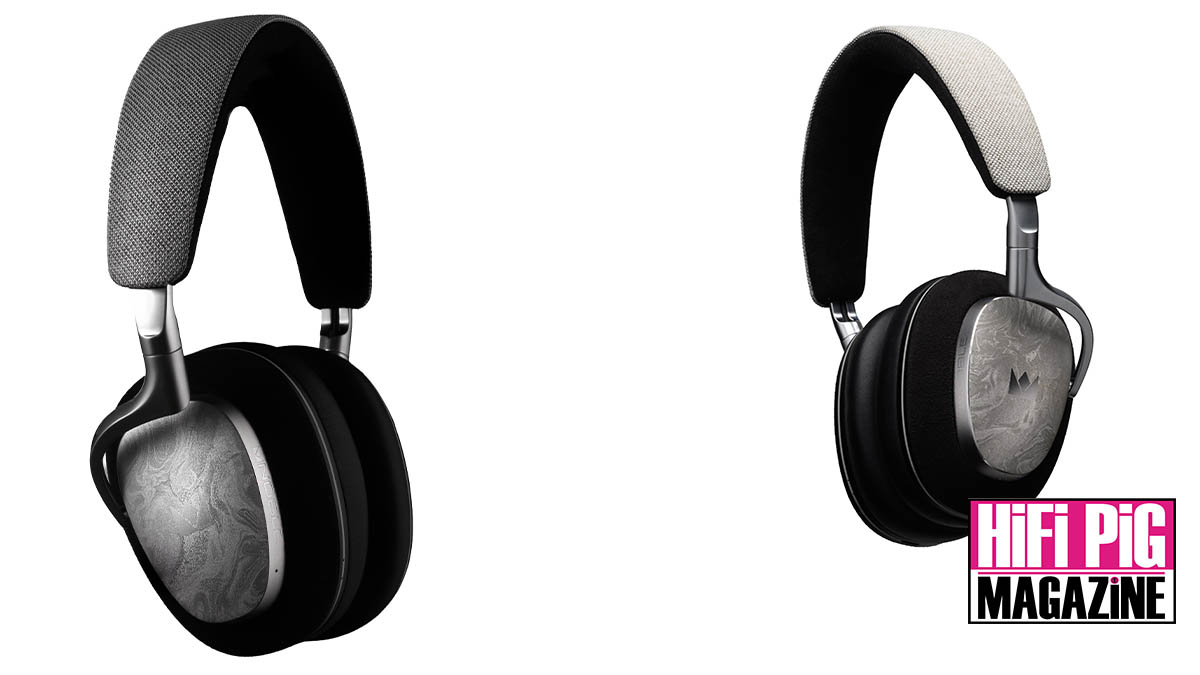
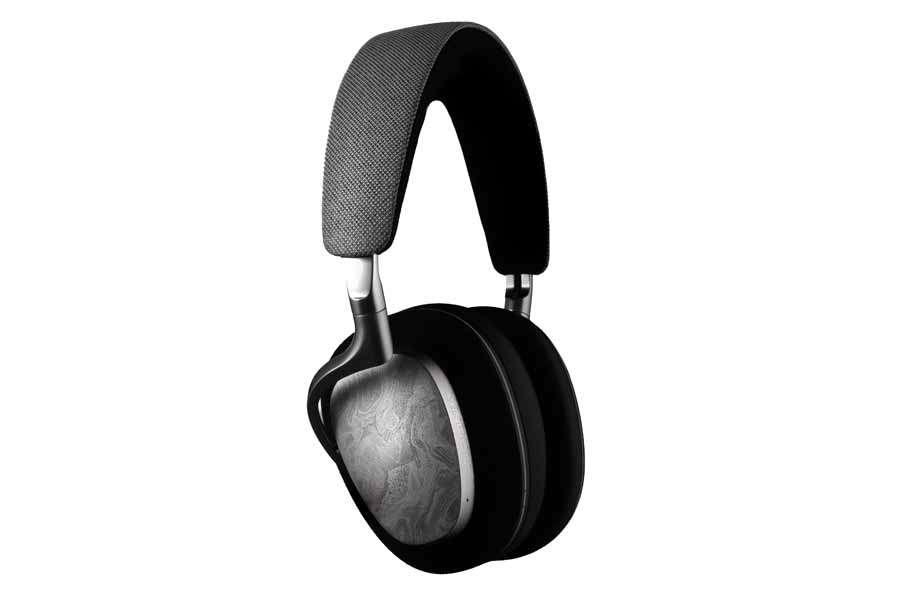
Noble Audio officially unveiled its second-generation flagship wireless over-ear headphones, the FoKus Artemis, on 4 June 2026, debuting at High End Vienna 2026. Artemis’ positioning is crystal clear — this isn’t a minor refresh of the FoKus Apollo. It’s a full-scale evolution of Noble’s wireless headphone technology.
Back in 2024, Noble entered the wireless over-ear market with the FoKus Apollo, making waves as “the world’s first dynamic + planar magnetic dual-driver wireless headphones.” Two years on, Noble describes Artemis as “one of the most significant wireless product launches in the company’s history,” pushing the driver configuration to a tri-brid hybrid — adding a Balanced Armature (BA) driver to create a dynamic + BA + planar magnetic architecture.
Noble Audio was founded by John Moulton in 2013, renowned for high-end custom in-ear monitors (CIEMs), later expanding into true wireless (TWS) and wireless over-ear headphones. From the FoKus Pro TWS to FoKus Apollo, and now Artemis, the brand has consistently pursued the path of “bringing audiophile-grade acoustic technology into the wireless space.”
🔧 The Tri-Brid Breakdown: Ending the Single-Driver Compromise
Traditional wireless over-ear headphones typically rely on a single dynamic driver to cover the full frequency range — even high-end models like the Focal Bathys or B&W Px8 ask one driver to handle everything from sub-bass to treble. This design choice inevitably involves trade-offs between low-end impact and high-frequency resolution.
Noble’s tri-brid approach on Artemis assigns each driver technology a dedicated role:
🔻 Dynamic Driver: Handles bass weight, body, and presence. The inherent advantages of a large-diaphragm dynamic driver — sub-bass extension and sheer quantity — are qualities that BA or planar drivers struggle to replicate.
◾ Balanced Armature (BA) Driver: This is Artemis’ biggest upgrade over Apollo. BA drivers are known for extremely fast transient response and mid-to-upper-frequency resolution. Noble says it’s responsible for “clarity, focus, and articulation” — precisely the frequency range where traditional wireless headphones most often compromise.
🔺 Planar Magnetic Driver: Continuing the design philosophy from Apollo, the planar driver delivers speed, openness, and high-frequency extension detail. The low-distortion characteristics of a large-area planar diaphragm keep the treble clean without harshness.
From a product design perspective, the real challenge of a tri-brid configuration isn’t hardware stacking — it’s the crossover network and DSP tuning. Three driver types with completely different sensitivity, impedance, and phase characteristics need Qualcomm’s QCC3095 DSP to handle precise crossover and time alignment. Noble says the overall sound target is “powerful, spacious and refined.”
🎵 Audiodo Personal Sound: Not Your Average EQ
Another key feature of Artemis is the integration of Audiodo Personal Sound and Audiosphere technology. Unlike traditional EQ presets, Audiodo uses a guided hearing assessment to build a personalised hearing profile, then adjusts playback based on your individual hearing characteristics.
Put simply: instead of applying the same frequency curve to everyone, it compensates based on what you actually hear. While this technology has seen use in professional studios and hearing aids, it remains relatively rare in consumer wireless headphones. Noble plans to integrate these features into an updated Noble FoKus app, with live demonstrations at High End Vienna 2026.
📡 Feature Rundown: ANC, Battery Life, User-Replaceable Battery
Artemis’ everyday practicality is flagship-grade too:
🔇 ANC + Transparency Mode: A 6-microphone array handles both noise cancellation and voice calls, with support for voice assistants and a proximity sensor (wear detection).
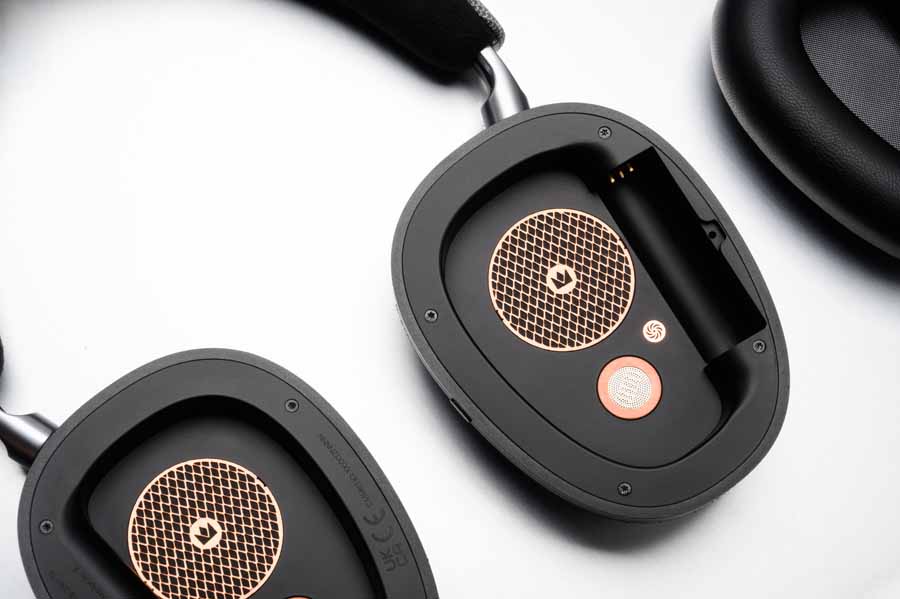
🔋 50+ Hour Battery + User-Replaceable Battery: The 600mAh battery delivers 50+ hours with ANC off, and 35+ hours with ANC on. More importantly — the battery is fully user-replaceable, an extreme rarity among flagship wireless headphones. Fast charging via USB-C takes under 1.5 hours for a full charge.
📡 Bluetooth 5.4 + Multipoint: Powered by the Qualcomm QCC3095 platform, with multipoint connectivity (two devices simultaneously), USB Audio mode, and wired connection via USB-C to 3.5mm adapter.
🛡️ IP52 Dust & Splash Resistance: An uncommon protection rating in the over-ear headphone category, handling daily exposure to sweat and light rain.
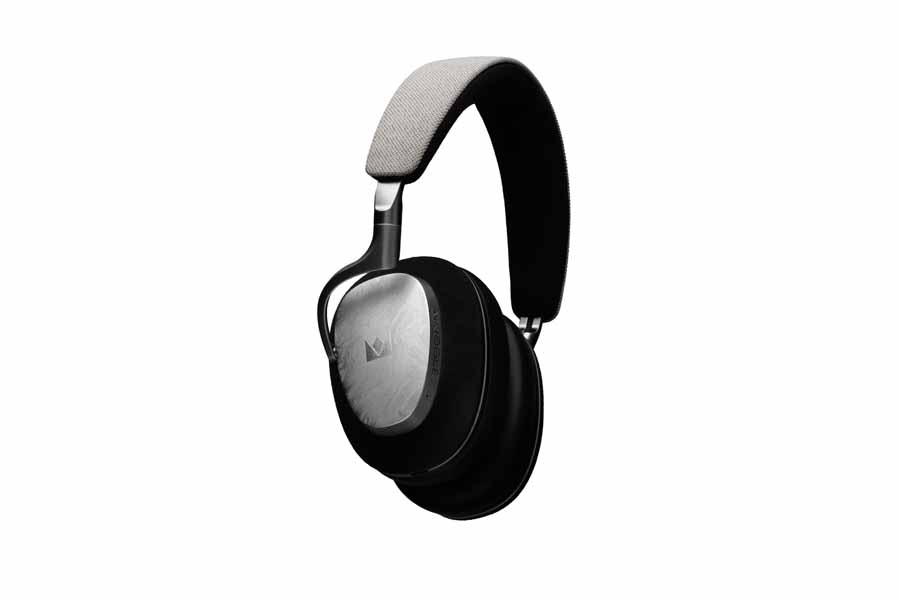
🎨 Lightweight + Replaceable Parts: Under 350g, swivelling earcup design for easy storage, magnetic removable earpads, and replaceable earcups.
💡 Kaia’s Take
Noble’s decisions with Artemis are genuinely interesting. Tri-brid configurations are business as usual in wired IEMs, but putting one into a wireless over-ear is a different beast entirely — crossover, DSP, power consumption, and physical space are all real challenges. The fact that Noble went ahead speaks to their confidence in the QCC3095’s DSP capabilities.
The user-replaceable battery is a refreshingly pragmatic design choice. The biggest enemy of flagship wireless headphones isn’t sound quality — it’s a sealed-in battery ageing until the whole unit becomes e-waste. Artemis’ replaceable battery directly pushes back against planned obsolescence, and that deserves real credit.
Audiodo personalisation is more meaningful than traditional EQ, but the end result depends on app execution quality and hearing assessment accuracy. At US$899, it goes head-to-head with the Focal Bathys MG (~US$999) and sits above the B&W Px8 (~US$699). Noble’s differentiation is clear: tri-brid drivers + replaceable battery. The one question mark: cramming three drivers, ANC, and a 600mAh battery into a sub-350g chassis — real-world comfort needs a hands-on verdict.
📋 Specifications
| Product Name | Noble Audio FoKus Artemis |
| Driver Configuration | 1× Dynamic + 1× Balanced Armature + 1× Planar Magnetic (Tri-Brid) |
| Bluetooth Chipset | Qualcomm QCC3095 |
| Bluetooth Version | Bluetooth 5.4 |
| Bluetooth Codecs | TBA (LDAC, aptX HD/Adaptive and other high-resolution codecs expected) |
| Noise Cancellation | ANC + Transparency Mode |
| Microphones | 6-microphone array |
| Personalised Audio | Audiodo Personal Sound + Audiosphere |
| Battery Capacity | 600mAh (user-replaceable) |
| Battery Life | 50+ hrs (ANC off) / 35+ hrs (ANC on) |
| Charging | USB-C, fast charge <1.5 hrs to full |
| Weight | <350g |
| Connectivity | Multipoint, USB Audio, 3.5mm wired (via USB-C adapter) |
| Protection Rating | IP52 dust and splash resistant |
| Other Features | Voice assistant, proximity sensor, Noble FoKus app, replaceable earpads, magnetic earcups, swivelling earcups |
| Price | US$899 / £799 / €949 (~HK$7,020) |
🏁 Market Positioning + Hong Kong Perspective
At US$899 (~HK$7,020), the FoKus Artemis sits squarely in the flagship wireless headphone battleground — above the B&W Px8 (~US$699) and just below the Focal Bathys MG (~US$999), while Noble’s own Osprey TWS (US$199) rounds out the product line at the entry level.
Noble’s differentiation strategy is clear: a tri-brid driver design at this price point is essentially unique, and the user-replaceable battery is a pragmatic advantage over the sealed, non-serviceable designs of competitors. Audiodo personalisation also carries more technical weight than traditional EQ.
❓ FAQ
🔹 How does the FoKus Artemis differ from the FoKus Apollo?
The FoKus Apollo (launched 2024) was Noble’s first wireless over-ear headphone, featuring a dynamic + planar magnetic dual-driver design. The FoKus Artemis is the second-generation flagship, upgrading to a tri-brid configuration (dynamic + balanced armature + planar magnetic), adding Audiodo personalised audio, a user-replaceable battery, IP52 dust and splash resistance, and upgrading Bluetooth from 5.3 to 5.4 (QCC3095 platform). Price has increased from US$649 to US$899.
🔹 What are the practical benefits of the tri-brid driver design?
Traditional wireless headphones typically use a single dynamic driver to cover the full frequency range, inevitably involving trade-offs between bass impact and treble resolution. Artemis’ tri-brid approach assigns each driver a dedicated role: the dynamic driver handles bass weight, the balanced armature delivers midrange clarity and detail, and the planar magnetic driver provides treble speed and extension. Each driver focuses on what it does best, theoretically delivering a more balanced and precise sound.
🔹 How does the user-replaceable battery work? Can I really swap it myself?
Noble Audio has confirmed that the Artemis’ 600mAh battery is fully user-replaceable — you can swap it yourself without sending the headphones back to the manufacturer. This is extremely rare among flagship wireless headphones and effectively extends the product’s lifespan. Detailed replacement instructions will be provided once the product ships.
🔹 What Bluetooth codecs does the Artemis support?
Noble Audio has not yet published the complete Bluetooth codec list for the FoKus Artemis. However, based on the Qualcomm QCC3095 platform’s capabilities, and the FoKus Apollo precedent (which supported LDAC and aptX HD), the Artemis is expected to support at least LDAC, aptX HD/Adaptive, and other high-resolution codecs. The final specification is subject to official confirmation.
📖 Further Reading
🔗 More Information
🛒 Noble Audio Official: nobleaudio.com
📰 HiFi Pig: Noble FoKus Artemis Wireless Over-Ear Headphones
📰 AVForums: Noble Audio unveils flagship FoKus Artemis wireless headphones
📰 AudioReviews: Noble Audio Unveils FoKus Artemis, Its Flagship Hybrid Wireless Over-ear Headphone