 Product News
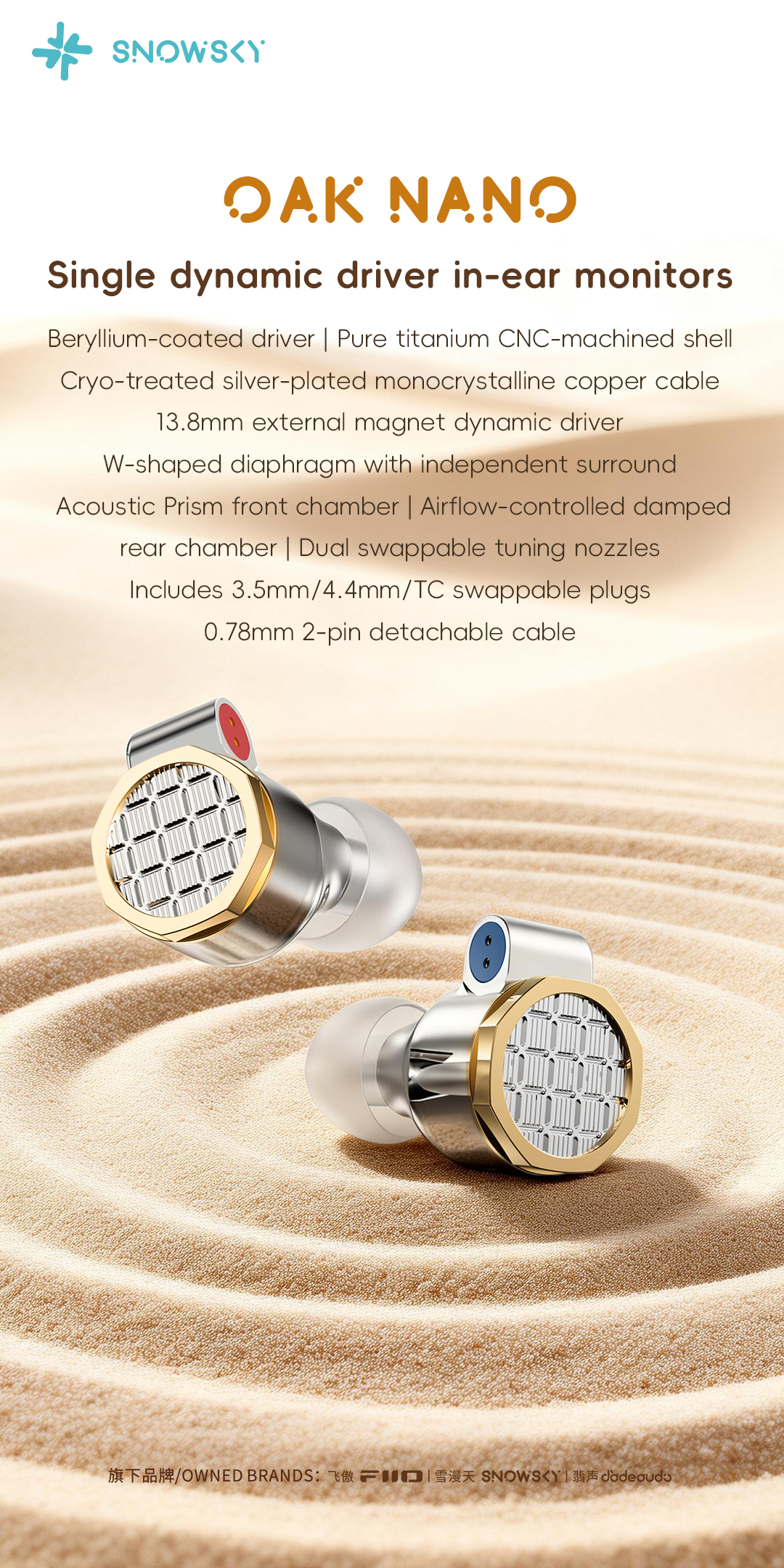
• FiiO sub-brand SNOWSKY launches OAK NANO — their first flagship single-DD IEM, on sale globally from May 29
• Core highlights: 13.8mm beryllium alloy dome dynamic driver, pure titanium CNC shell, ~1.5T magnetic flux
• Dual tuning flexibility: user-swappable red/black tuning nozzles + Type-C DSP plug with 8-band PEQ via FiiO Control App
• Accessories: 22 pairs of ear tips, 3 swappable plugs (3.5mm / 4.4mm / Type-C DSP), -192°C cryogenically treated 6N OCC silver-plated single-crystal copper cable
• 💰 Price: US$449
📑 Table of Contents
- SNOWSKY Brand Positioning and the Birth of OAK NANO
- A Materials Science Perspective: Beryllium Alloy Diaphragm × Pure Titanium Shell × Acoustic Prism
- Dual Tuning System: Swappable Nozzles + PEQ — Hardware Meets Software
- Kaia’s Take: A Product Designer’s Perspective
- Technical Specifications at a Glance
- Market Positioning & Hong Kong Perspective
📝 SNOWSKY Brand Positioning and the Birth of OAK NANO
SNOWSKY is a sub-brand under FiiO, tracing its roots back to Jade Audio — a brand line focused on entry-level, value-driven products. As the SNOWSKY brand has matured, its positioning has steadily evolved towards “design-driven, materials-first” territory, and the OAK NANO marks the brand’s first truly flagship product.
Interestingly, the OAK NANO was originally slated to launch under the main FiiO brand as the FD17 — the direct successor to the FD7, FiiO’s previous pure-beryllium single-dynamic-driver flagship. During development, however, the team decided to bring it under the SNOWSKY banner, making it the debut model of the OAK series. The move speaks volumes about SNOWSKY’s ambition: no longer just a “budget side-line,” but a standalone brand with a flagship of its own.
Officially announced on May 29, 2026, the OAK NANO stakes its claim on single dynamic driver + beryllium alloy diaphragm + generous accessory package, targeting portable audiophiles who value tunability and long-term upgrade potential. Below, we break the product down through the twin lenses of materials science and user-adjustable tuning.
🔧 A Materials Science Perspective: Beryllium Alloy Diaphragm × Pure Titanium Shell × Acoustic Prism
🥇 Beryllium Alloy Dome Diaphragm: A More Practical Engineering Trade-Off Than Pure Beryllium
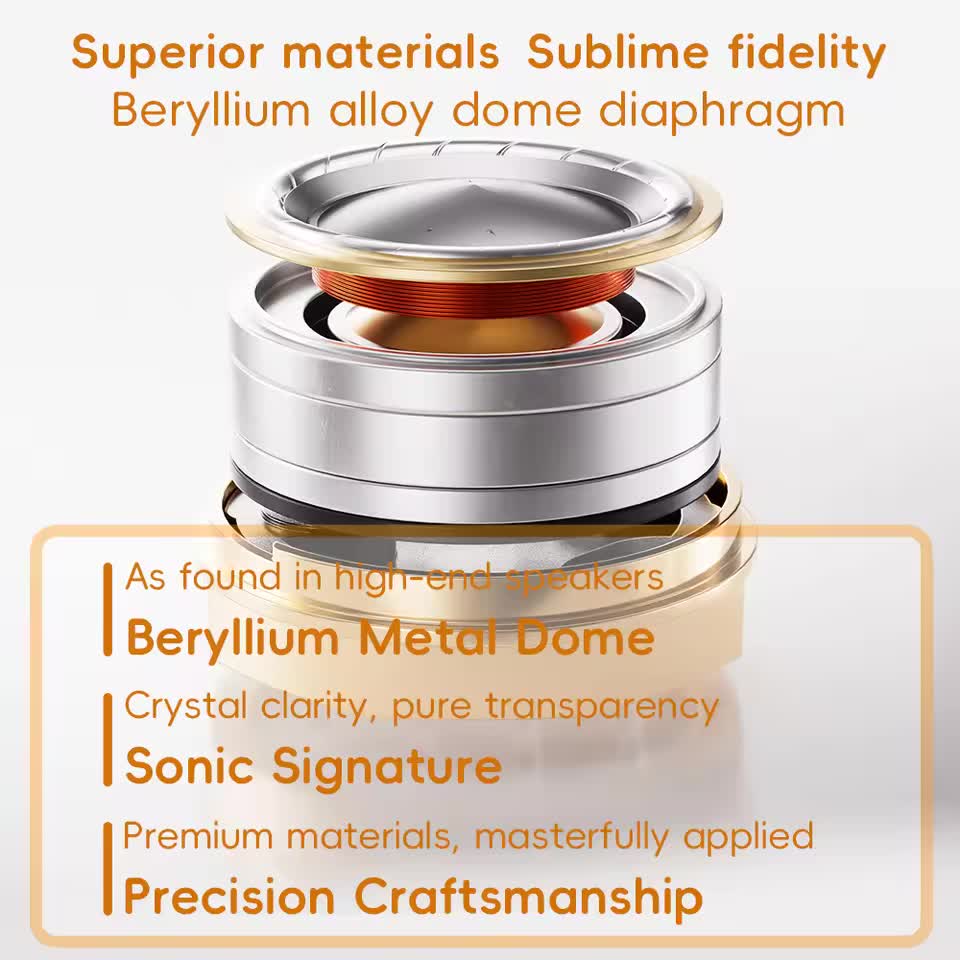
Beryllium is widely regarded as a “dream diaphragm material” in the audio world — with an exceptionally high stiffness-to-weight ratio and blazing-fast acoustic propagation velocity, it enables vanishingly low distortion and lightning-quick transient response. FiiO’s own FD7 made a name for itself with a pure beryllium diaphragm, but the extreme difficulty and cost of machining pure beryllium limited its mass-production viability.
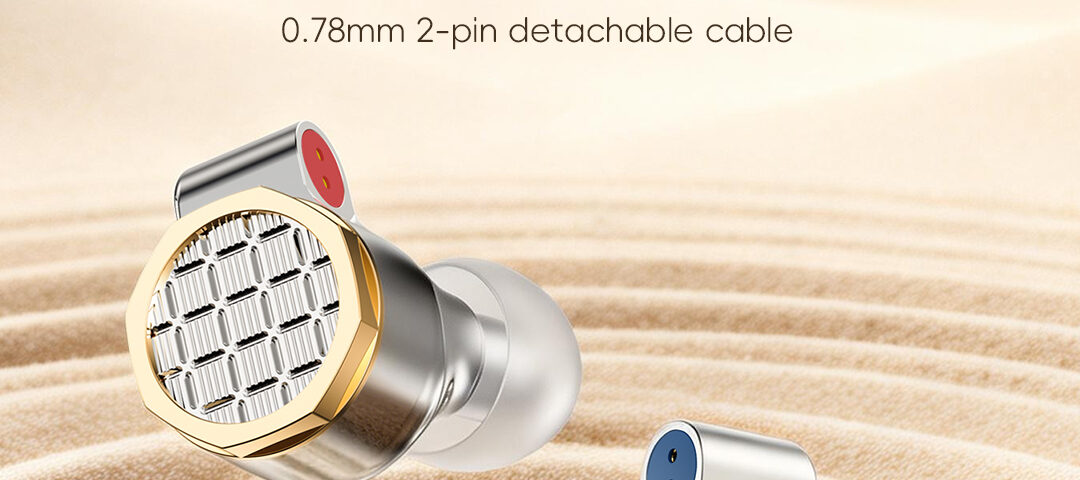
The OAK NANO instead uses a beryllium alloy dome diaphragm — beryllium deployed in alloy form, retaining near-identical acoustic properties to pure beryllium while dramatically reducing manufacturing complexity and cost. FiiO claims the diaphragm is 50% thinner than conventional designs, and paired with a large 13.8mm diameter and an independent W-shaped surround, it delivers the physical trifecta of “larger surface area, lower mass, faster response.”
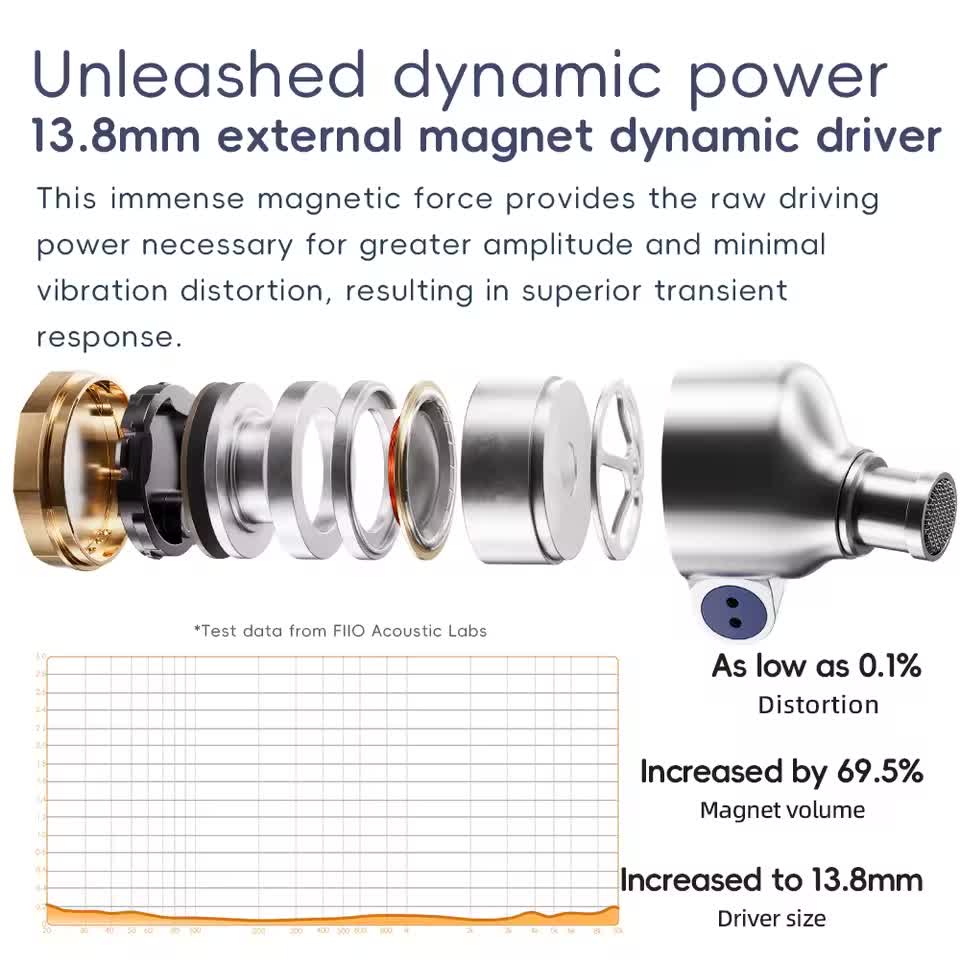
The magnetic circuit has seen equally serious investment: the magnet volume has grown by 69.5% compared to the FD7, pushing magnetic flux density at the voice coil gap to nearly 1.5 Tesla — a figure that sits among the very best in the single-DD IEM segment. A stronger magnetic field translates directly to greater driver control and lower distortion, with FiiO reporting just 0.1% THD at 114dB SPL.
🪶 Pure Titanium CNC Shell: Watch-Grade Manufacturing, Brought Down to IEMs
Titanium alloy in audio has long been a hallmark of high-end products — dense, hard, highly corrosion-resistant, and possessing a distinctive metallic tactility. The OAK NANO’s shell undergoes mirror polishing, CNC precision machining, and PVD coating across multiple finishing stages. FiiO describes the surface quality as “watch-grade machining precision” — not marketing hyperbole, given that pure titanium is notoriously abrasive on cutting tools, demanding significantly higher manufacturing investment to achieve this level of surface refinement.
📐 Acoustic Prism Front Cavity + Damped Rear Cavity: Technology Trickled Down from the FD7
The OAK NANO inherits the FD7’s Acoustic Prism front cavity design — a specially shaped geometric structure placed in the front cavity that corrects phase deviations as sound waves propagate, suppressing standing-wave distortion. The result is a cleaner, more precisely imaged sound.
In the rear cavity, micro-precision CNC acoustic damping mesh regulates internal airflow and suppresses resonant frequencies. FiiO notes this design is particularly effective in the 100Hz–4kHz range — exactly where the fundamental tones of vocals and most instruments reside — directly influencing the perceived “density” and “physicality” of the listening experience.
🎛️ Dual Tuning System: Swappable Nozzles + PEQ — Hardware Meets Software

🔴⚫ Red & Black Tuning Nozzles: Physical Sound Switching
Two pairs of tuning nozzles are included, using acoustic damping materials of different densities to deliver two distinct sonic profiles:
Black nozzle (default): lower damping, preserving full treble extension and air — ideal for listeners who prioritise detail retrieval and resolution.
Red nozzle: slightly higher damping, gently taming treble energy for a more relaxed, easier long-listening experience. Some Head-Fi reviewers have noted the red nozzle sounds more “balanced” overall.
This type of physical tuning — directly altering the acoustic loading conditions rather than applying digital signal processing — carries far more credibility with purist audiophiles who prefer their sound “untouched” by EQ. For those who do enjoy tweaking, however, there’s another layer…
🔌 Type-C DSP Plug: 8-Band PEQ Software Tuning
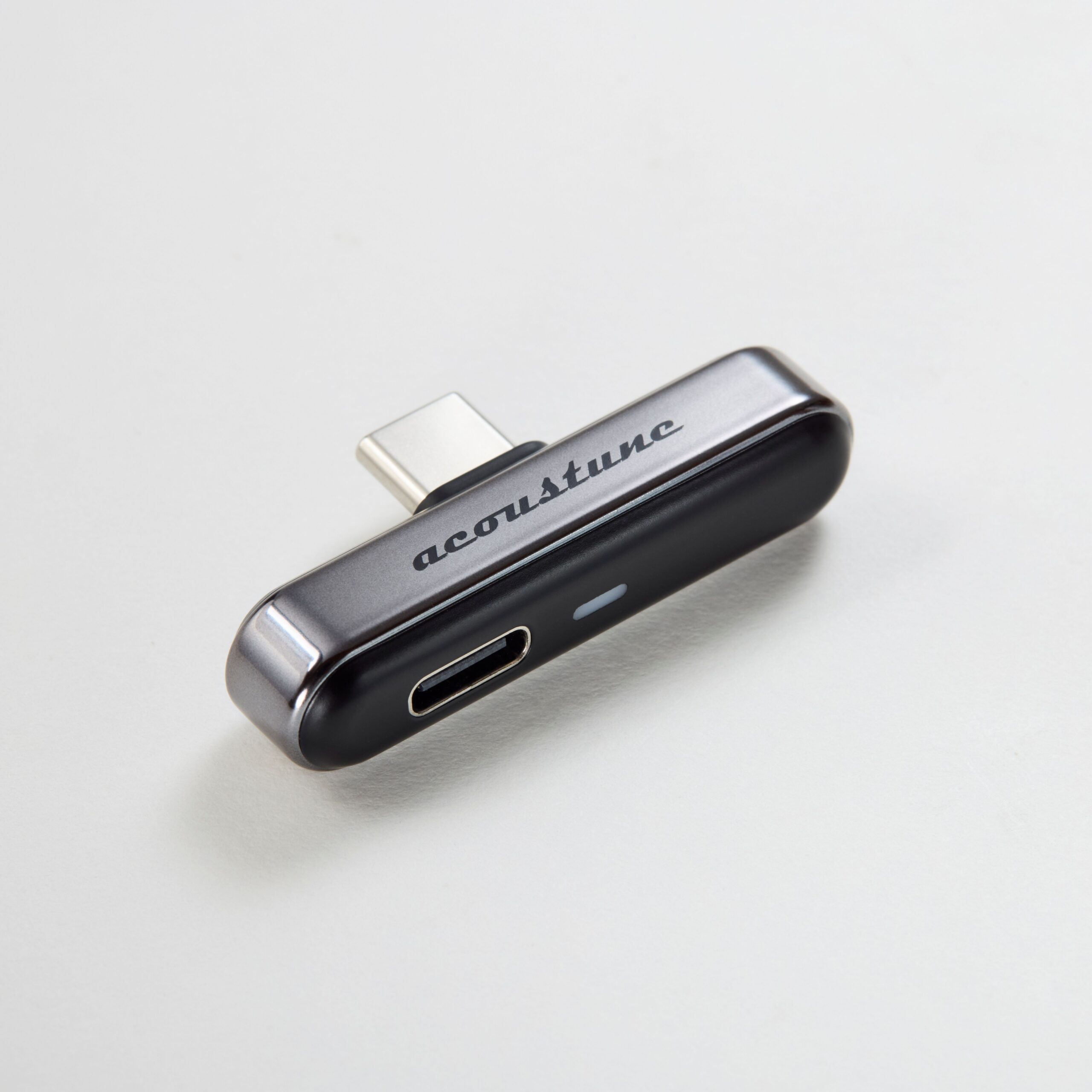
The OAK NANO’s Type-C plug is no ordinary adapter — it houses a BES3001-SP DSP audio decoding chip, supporting 32-bit/384kHz PCM hi-res audio decoding and, crucially, 8-band precision PEQ (parametric equalizer) tuning via the FiiO Control App.
The advantage of PEQ is granularity: you can independently set the centre frequency, gain, and Q-factor (bandwidth) for each band — significantly more flexible than the fixed bands of a graphic EQ. For users who enjoy fine-tuning their sound, this effectively opens up an infinite universe of custom tunings.
Even more practically, the Type-C plug carries a balanced output — meaning you can plug into any USB-C phone or computer and enjoy the benefits of balanced drive (lower noise floor, higher channel separation) without needing a separate DAC.
🧊 -192°C Cryogenically Treated Cable
The stock cable is 6N (99.99998%) OCC single-crystal copper with silver plating, subjected to -192°C liquid nitrogen cryogenic treatment. Cryogenic treatment in audio is a debated but widely adopted technique — the principle being that extreme low temperatures alter the metal’s crystal structure, reducing grain boundary defects and in turn lowering resistance and improving signal transmission purity. Regardless of where you stand on the audibility of cryo treatment, 6N OCC single-crystal copper is itself a benchmark material for high-end cables.
💡 Kaia’s Take: A Product Designer’s Perspective
From a product design standpoint, the OAK NANO is a collection of very smart engineering decisions. Beryllium alloy over pure beryllium — this choice reflects pragmatic thinking around mass-production feasibility and cost control, not a “downgrade.” The combination of a 13.8mm driver with 1.5T magnetic flux density is already ambitious in a single-DD architecture.
The dual-track tuning freedom — nozzles + PEQ — is rarely seen at this price point. The hardware layer gives you two “factory preset paths”; the software layer gives you infinite fine-tuning headroom. And the 22 pairs of ear tips aren’t just a numbers game — they’re a genuine response to the reality that different ear canals need different fit solutions.
Potential caveats: 50Ω impedance means these aren’t exactly easy to drive — a phone’s 3.5mm jack may struggle. The Type-C DSP plug is a nice addition, but the real-world sonic performance of the BES3001-SP chip awaits more independent reviews. And at US$449, the OAK NANO goes up against plenty of hybrid-driver competition (BA/EST combos). A single DD in this bracket needs to win on “material integrity” and “tuning maturity,” not spec-sheet numbers.
📋 Technical Specifications at a Glance
| Product Name | SNOWSKY OAK NANO |
| Driver Configuration | 13.8mm beryllium alloy dome dynamic driver ×1 (independent W-shaped surround) |
| Frequency Response | 10Hz – 40kHz |
| Impedance | 50Ω @ 1kHz |
| Sensitivity | 112dB/mW @ 1kHz |
| Magnetic Flux | ~1.5 Tesla (at voice coil gap) |
| Distortion | As low as 0.1% (at 114dB SPL) |
| Shell Material | Pure titanium CNC (mirror-polished + PVD coating) |
| Front Cavity Design | Acoustic Prism |
| Rear Cavity Design | Micro-precision CNC acoustic damping mesh (airflow control) |
| Tuning Nozzles | Swappable red & black nozzles with different damping densities |
| Cable | -192°C cryogenically treated 6N OCC silver-plated single-crystal copper |
| Plugs | Swappable 3.5mm SE / 4.4mm balanced / Type-C DSP (BES3001-SP, 32-bit/384kHz, 8-band PEQ) |
| Connector | 0.78mm 2-pin detachable cable |
| Accessories | 22 pairs of ear tips + red/black tuning nozzles + 3 swappable plugs + custom carrying case |
| Certification | Japan Audio Society Hi-Res Audio certified |
| Price | US$449 |
| Release Date | May 29, 2026 |
❓ Frequently Asked Questions
Q: How is the OAK NANO related to the FiiO FD7?
A: The OAK NANO was originally planned as the FiiO FD17, the direct successor to the FD7. Upgrades include a larger 13.8mm driver (FD7: 12mm), pure titanium shell (FD7: stainless steel), magnetic flux boosted from ~1T to nearly 1.5T, and new features like the Type-C DSP plug and dual tuning nozzles.
Q: What’s the difference between beryllium alloy and pure beryllium diaphragms?
A: Pure beryllium (as used in the FD7) is a top-tier material but extremely difficult and costly to machine. Beryllium alloy retains near-identical acoustic properties while dramatically reducing manufacturing complexity and cost. FiiO claims the OAK NANO’s diaphragm is 50% thinner than conventional designs.
Q: What’s the difference between the red and black tuning nozzles?
A: The black nozzle (default) has lower damping, preserving full treble extension and air. The red nozzle has slightly higher damping, gently taming treble energy for a more relaxed presentation. Both are physical acoustic tuning — not digital EQ.
Q: What does the Type-C DSP plug do?
A: It houses a BES3001-SP DSP chip, supporting 32-bit/384kHz PCM decoding and 8-band PEQ tuning via the FiiO Control App. It also carries a balanced output — plug directly into USB-C for balanced drive without a separate DAC.
Q: Where can I buy it in Hong Kong and what’s the price?
A: Officially priced at US$449, available now via the FiiO AliExpress Official Store with international shipping (including Hong Kong). Local HK authorised dealer info is yet to be confirmed — order direct from AliExpress or check with FiiO’s authorised local distributors for updates.
📖 Further Reading
- 🆕 More Product News — Hearit’s latest product launch coverage
- 🎧 Wired Earphones — Browse more wired earphone content
- 🔍 Search FiiO on Hearit — All FiiO-related articles
🏁 Market Positioning & Hong Kong Perspective
At US$449, the OAK NANO enters a fiercely competitive bracket — hybrid-driver IEMs (1DD+4BA, 1DD+2EST, and every combination in between) are abundant at this price. For a single-DD to earn its place, it has to win on material integrity, tuning maturity, and the sheer scale of its accessory package.
The OAK NANO’s strategy is refreshingly clear:
- 🥇 Material persuasion: beryllium alloy diaphragm + pure titanium shell + cryo-treated cable — every element tells a materials story that audiophiles can get behind
- 🎛️ Tunability: dual nozzles + PEQ + swappable plugs — satisfies users who love to fine-tune their own sound
- 🎁 Accessory commitment: 22 pairs of ear tips aren’t for padding numbers — it’s a genuine acknowledgment that different ear shapes need different fit solutions
That said, the 50Ω impedance serves as a reminder: this isn’t a “plug and forget” IEM for casual phone listening. You’ll want a capable DAP or DAC/amp to unlock its full potential.
For Hong Kong users, the OAK NANO can currently be ordered directly from the FiiO Official Store on AliExpress (international shipping available), priced at US$449. Local authorised dealer availability is yet to be confirmed by FiiO — stay tuned to Hearit for follow-up coverage.
Bottom line: SNOWSKY’s first flagship punches above expectations with material integrity and an accessory package that redefines its price bracket. If you value “tunability” over spec-sheet numbers and have a soft spot for single-DD purity, the OAK NANO is well worth your attention.
🔗 More Information
📍 FiiO official launch announcement: SNOWSKY OAK NANO is Now Officially Launched!
📍 OAK NANO product page: FiiO — OAK NANO
🛒 AliExpress Official Store: FiiO Official Store — OAK NANO
📰 Head-Fi discussion & reviews: Head-Fi — FiiO SnowSky Oak Nano
📰 Pragmatic Audio in-depth review: Pragmatic Audio Review