 Music News
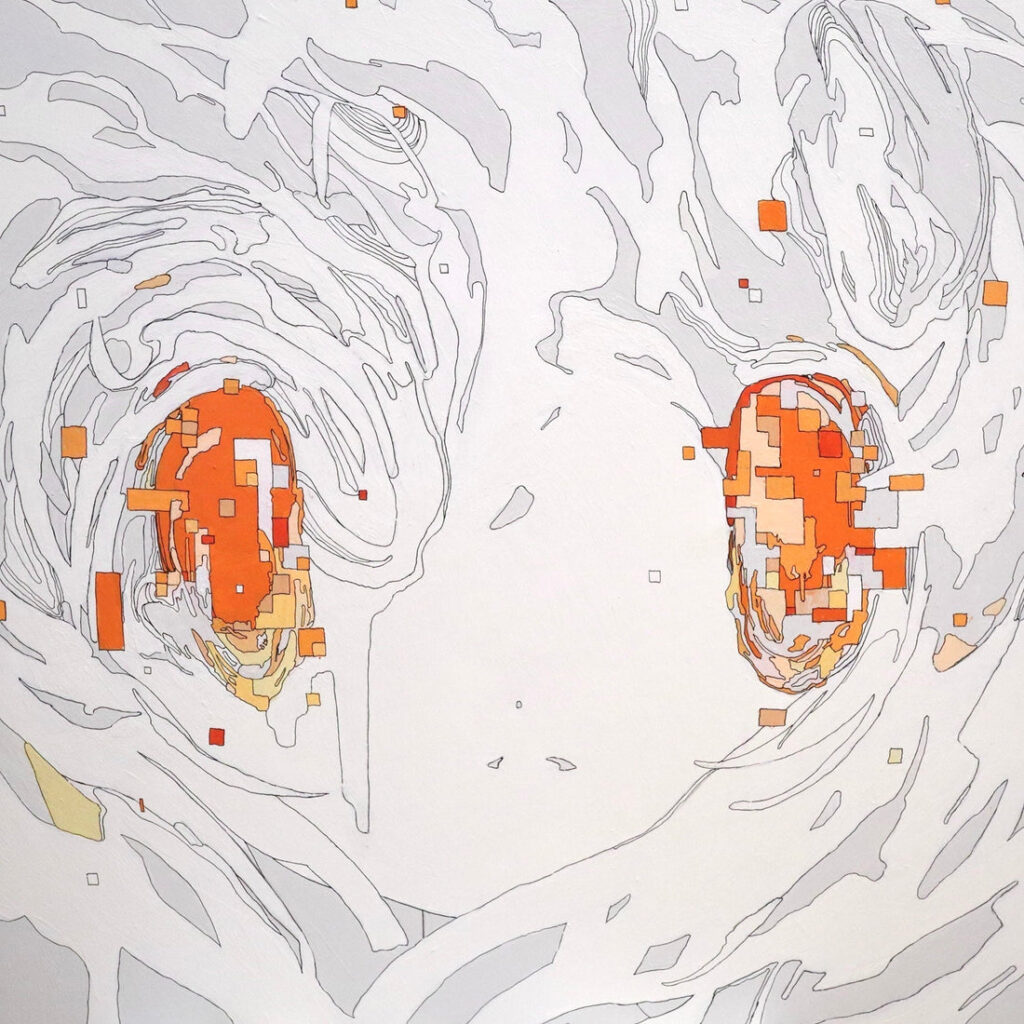
🎵 Artist: Masao Sasagawa
💿 Album: CULTURE DRUG ORCHESTRA (4th album)
📅 Release: April 29, 2026
🔊 Audio: Hi-Res (24bit/48kHz)
💰 Price: Standard ¥3,300 (tax incl.) / Blu-ray ¥7,000 (tax incl.)
🎤 Guest: Sai Hiratsuka (Track 3 “Kaikoshugi Watashi”)
📌 Kaia’s take: An album completed at a pace bordering on self-destruction — yet it’s precisely in this extreme state that Sasagawa found his most honest self.
🎤 Who Is Masao Sasagawa?
Masao Sasagawa is a Japanese independent musician who debuted in 2019 with his first album Atarashii Karada, followed by Welcome to the Sunny Side (2023) and STRANGE POP (2025) — each release a complete shedding of skin. CULTURE DRUG ORCHESTRA is his fourth album, arriving just one year after its predecessor.
Sasagawa’s musical world resists easy genre classification. It carries the texture of doujin music, the instinct of alternative rock, and the experimental edge of electronic music — all fused within a single creative vision. If you’re searching for a reference point, you could call him the successor Japan’s Radiohead devotees would recognise — but that framing does Sasagawa a disservice, because his music has never been a collection of references. It’s the re-architecture of every influence he’s absorbed, rebuilt from the ground up.
💿 CULTURE DRUG ORCHESTRA — A One-Month Miracle
The most astonishing fact: all 13 tracks on this album were created from scratch, completed in roughly one month.
In his OTOTOY interview, Sasagawa explained: “The production team’s Google Calendar already had ‘ALBUM RELEASE’ marked on it, but no one told me. Someone asked, ‘Masao-kun, you’re fine to deliver the audio, right?’ — that’s when I found out. I didn’t have a single song ready.”
This backstory gives the album an unfeigned sense of spontaneity. On his recording approach, Sasagawa said: “This time, nearly everything was done in one take. What you can’t do on a given day, no amount of effort that day will change — I’ve always believed that.” This isn’t laziness; it’s a near-obsessive trust in instinct.
🎵 “Kimi ni Natte Iku” — The Process of Becoming You
If this album demands a single track that best captures Sasagawa’s current state of mind, Kaia would choose Track 4: “Kimi ni Natte Iku”.
The title translates roughly to “Gradually Becoming You.” Sasagawa described its origin in the interview: the lyrics began with the question “What does ‘becoming you’ even mean?” and unfolded from there. He observed that in the age of social media, the sensation of “becoming someone else” isn’t unique to anyone — every day, without realising it, we’re being shaped by algorithmically recommended content, our preferences and behaviours quietly rewritten.
This isn’t a simple confession of losing oneself. Sasagawa avoids the cliché of “self-loss” entirely. Instead, he presents the blurring boundary between self and other as a state of flux — not that you’ve disappeared, but that your outline is being redrawn by the cultural currents of our time.
This question — “If the self being shaped is no longer the self, then what is it?” — is the album’s core proposition. “Culture Drug” isn’t a hollow title. It points directly at everything we absorb daily: logging into social platforms, scrolling algorithmic feeds, unconsciously accepting what’s served to us. And “Kimi ni Natte Iku” is this proposition’s gentlest yet sharpest expression.
🔧 Production Breakdown
Nearly the entire album was recorded in single takes — a decision that wasn’t merely a product of time pressure, but a manifestation of Sasagawa’s creative philosophy: “What I can’t do, I can’t do. No amount of effort on that day changes it.” This attitude gives every second of the album an unrepeatable immediacy.
Key production highlights worth noting:
- “Kaikoshugi Watashi” feat. Sai Hiratsuka: The album’s sole guest appearance. Sasagawa said: “If Hiratsuka-san didn’t sing this track, I’d rather not include it at all.” The song features a chant-like vocal treatment in one section, paired with Hiratsuka’s voice to produce a strange texture at the intersection of cyberpunk and doujin music.
- “Nou Nai”: The album’s longest track. Sasagawa says it reflects his process of shaking off the “imaginary voice of the masses” — previously he’d constrain himself with thoughts like “if the song doesn’t kick in fast enough, people will skip it.” Now he follows his own instincts: “If I want a longer intro, I make it longer.”
- “Yuuhi”: A deliberate homage to John Lennon’s “Isolation.” Sasagawa noted: “John Lennon/Plastic Ono Band is often described as ‘minimalist,’ but to my ears it sounds noisy, with incredibly high information density.” This contradiction — stripped to the surface yet dense on impact — is precisely the quality that defines Sasagawa’s own music.
- “Kamisama”: Quotes the Rimbaud verse referenced in the final scene of Godard’s Pierrot le Fou in Mobile Suit Gundam. Sasagawa says that this time he can finally admit it openly: games, music, novels, internet culture — these are what shaped him. Where he once felt a little embarrassed about it, this time he’s holding nothing back.
📋 Album Specs & Track Listing
| Item | Details |
|---|---|
| Artist | Masao Sasagawa |
| Album | CULTURE DRUG ORCHESTRA |
| Type | 4th Album (13 tracks) |
| Release Date | April 29, 2026 |
| Label | THINKR |
| Hi-Res Spec | 24bit/48kHz (ALAC/FLAC/WAV/AAC) |
| Price (Standard) | ¥3,300 (tax incl.) |
| Price (Blu-ray) | ¥7,000 (tax incl.) |
| Guest | Sai Hiratsuka (Track 3) |
📀 Track Listing
| # | Title | Notes |
|---|---|---|
| 1 | CULTURE DRUG ORCHESTRA | Title track; psychedelic point of departure |
| 2 | HAMETSU no Negai | — |
| 3 | Kaikoshugi Watashi | feat. Sai Hiratsuka |
| 4 | Kimi ni Natte Iku | ⭐ Kaia’s pick — the fluid boundary between self and other |
| 5 | Yuuhi | Homage to Lennon’s “Isolation” |
| 6 | Suiei Kyoushitsu | BURGER NUDS / syrup16g textures |
| 7 | Parade | The album’s most inexplicable track |
| 8 | Churu Churu | — |
| 9 | Yuurei no Machi | A continuation on life and death |
| 10 | To Beat | — |
| 11 | SADMACHINEENSEMBLE | — |
| 12 | Nou Nai | Longest track; declaration of freedom from the imaginary crowd |
| 13 | Kamisama | Quotes Godard + Rimbaud via Gundam |
💡 Kaia’s Take
After sitting with CULTURE DRUG ORCHESTRA, my deepest impression isn’t “how good is this album” — it’s that Masao Sasagawa has finally stopped fighting himself.
In the interview, he said something that matters deeply: “We were free, originally.” It sounds simple, but in an era where algorithms dictate what you listen to, watch, and buy, the word “free” carries a particular weight. Sasagawa isn’t a rebel waving a banner. He’s someone who openly admits he’s immersed in the same currents — he keeps two pet robots, is open-minded about AI, yet feels that precisely because we live in this era, the mystery of physical embodiment feels more urgent than ever.
“Kimi ni Natte Iku” earns its recommendation not because it has the best melody (though it’s genuinely beautiful), but because it touches the nerve of our age most directly. Every single one of us, swept up in the currents of social media, is in the process of “becoming someone.” The song doesn’t hand you an answer — it simply presents the process itself, leaving you to feel it for yourself.
From a production standpoint, the decision to record the entire album in single takes — and the philosophy of “what you can’t do, you can’t do” — gives every track a spine-tingling immediacy. No polish, no retakes, no “we’ll fix it later.” This approach mirrors the album’s theme perfectly: the moment you decide to stop lying to yourself about what you actually like, you have to accept that each present version of yourself is the best one available.
Takeaway: An album with attitude — not because it shouts, but because it quietly tells the truth.
🏁 Verdict
CULTURE DRUG ORCHESTRA is Masao Sasagawa’s fourth album and his most honest one to date. Created from zero, completed within a month, recorded almost entirely in single takes — this isn’t an inspirational story. It’s the record of a person finally being completely candid about how he creates.
If you want one track to start with, listen to “Kimi ni Natte Iku.” If you want to understand why Masao Sasagawa deserves your attention, listen to the whole album.
❓ FAQ
🔹 Who is Masao Sasagawa?
Masao Sasagawa is a Japanese singer-songwriter who debuted in 2019. Known for his literary lyrics and genre-defying sound that fuses doujin music textures, alternative rock instincts, and electronic experimentation, he has become a distinctive voice in Japan’s independent music scene.
🔹 What is the theme of CULTURE DRUG ORCHESTRA?
The album explores the concept of “cultural addiction” — how algorithm-driven social media and streaming platforms quietly reshape our identities without our conscious awareness. The central question: if the self being shaped by algorithms is no longer truly yours, then what is it? The album’s answer is less a manifesto than a raw, honest confrontation with the question itself.
🔹 Where can I listen to this album?
The album is available on major streaming platforms (Spotify, Apple Music, YouTube Music) and Japanese music platforms (mora, OTOTOY). Hi-Res 24bit/48kHz downloads are available on OTOTOY. See the Listen & Buy section below for direct links.
🔹 What does the album sound like?
The album carries Sasagawa’s signature blend of doujin music texture, alternative rock directness, and electronic experimentation. Nearly the entire album was recorded in single takes, giving it a raw, unfiltered immediacy. Tracks range from alt-rock density (“Kimi ni Natte Iku”) to eerie cyberpunk-doujin hybrids (“Kaikoshugi Watashi” feat. Sai Hiratsuka) and psychedelic sprawl (“Nou Nai”).
🔹 Which tracks should I start with?
Start with “Kimi ni Natte Iku” (Track 4) — the album’s emotional and conceptual centrepiece. From there, try “Kaikoshugi Watashi” (Track 3) for its guest vocal with Sai Hiratsuka, “Yuuhi” (Track 5) for its Lennon-inspired minimalism, and “Nou Nai” (Track 12) for the album’s longest and most unshackled statement. The album is conceptually unified, so a full listen from start to finish is recommended.
📖 Further Reading
🔗 Listen & Buy
- OTOTOY Hi-Res Download (24bit/48kHz)
- Streaming / Download Links (All Platforms)
- Masao Sasagawa Official Website
- Blu-ray Edition (Official Store)