
 耳機展導覽
耳機展導覽 
- The Headphone Soundstage Dilemma
- Brand Background: European Startup Debut at the Start-Up Area
- Technology Breakdown: DDTS Dual Driver True Stereo
- Prototype Status: Proof of Concept Done, Mass Production Is a Long Road
- Kaia’s Product Designer Take
- Pros & Cons
- Exhibition Info
- FAQ
- Further Reading
- 📋 Known Specifications
- 🎯 Who Should Pay Attention?
- 🏁 Summary
- 🔗 More Info
📝 The Headphone Soundstage Dilemma
Ever noticed that when listening to music on headphones — whether it’s a high-end planar, electrostatic, or dynamic — everything sounds like it’s happening “inside your head”? The vocalist sits between your eyebrows, the guitar behind your skull, the drum kit scattered across the sides of your cranium. This isn’t your imagination — it’s the physical reality of the traditional headphone one-driver-per-ear layout.
Loudspeaker systems can project a frontal soundstage because of natural acoustic crossfeed — your left ear hears the right-channel signal after it’s been attenuated and delayed by the air, and vice versa. But headphones completely isolate the left and right channels, so this natural crossfeed doesn’t exist, and the result is a soundstage that “collapses” inside your head. DSP crossfeed solutions (like SPL Phonitor Matrix, Waves Nx) can simulate the effect, but they inevitably introduce AD/DA conversion losses and latency. Now, at the HIGH END Vienna 2026 Start-Up Area, True Stereo Labs is attempting to tackle this problem head-on with a purely passive acoustic solution.
🏭 Brand Background: European Startup Debut at the Start-Up Area
True Stereo Labs (TSL) is a European startup making its public debut at the HIGH END Vienna 2026 Start-Up Area. The brand tagline is elegantly direct — “The concert hall, on your head.” From the technical documentation on their website, it’s clear the team has solid acoustic engineering credentials, though specific founder and team details haven’t been disclosed yet.
TSL is still in the early stage — no products have been mass-produced. What’s on display at the show is the Reference Prototype v1.0. The brand is actively seeking technology licensing, OEM partnerships, and brand collaborations. Simply put, their goal isn’t necessarily to sell headphones themselves, but to turn DDTS technology into a platform solution that can be licensed to other manufacturers. This model isn’t common in the audio industry, but other Start-Up Area exhibitors at the show are pursuing similar strategies, such as HOXIT AUDIO V1’s modular planar platform.
🔧 Technology Breakdown: DDTS Dual Driver True Stereo
The core concept of DDTS (Dual Driver True Stereo) is elegantly simple: since the problem with traditional headphones is having only one channel per side, why not put two drivers in each earcup so each ear hears a correctly blended mix of both the left and right channels?
Here’s how it works:
- Primary Driver: Plays the native channel signal — left ear hears left channel, right ear hears right channel. This part works just like a traditional headphone.
- Secondary Driver: Plays the contralateral channel signal processed through a Correction Circuit — the left ear hears a corrected version of the right channel (simulating the natural delay and attenuation of a right speaker reaching the left ear in real listening environments), and vice versa.
- Waveguide Combiner: A 3D-printed photopolymer resin acoustic chamber that mixes the sound waves from both drivers with the correct path lengths, ensuring a clean, coherent wavefront when it reaches the ear canal.
- Correction Circuit: A purely passive amplitude + phase network that precisely distributes the incoming left/right channel signals to the primary and secondary drivers — no DSP or ADC/DAC conversion required.
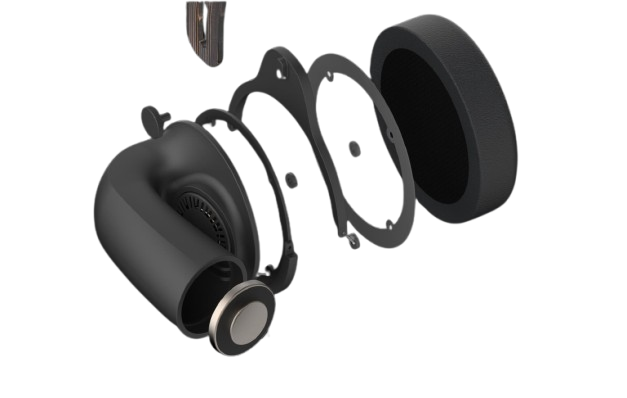
In other words: TSL is taking the natural acoustic crossfeed that occurs when listening to speakers — a physical phenomenon — and recreating it directly inside the headphone acoustic chamber. The entire system is fully passive, zero latency, and in theory works with any source — from a desktop DAC/amp to a phone’s 3.5mm output. TSL notes that the same design can be configured as closed-back with sealed covers or open-back with breathable mesh grilles, depending on the drivers chosen. The technology is currently Patent Pending.
📋 Prototype Status: Proof of Concept Done, Mass Production Is a Long Road
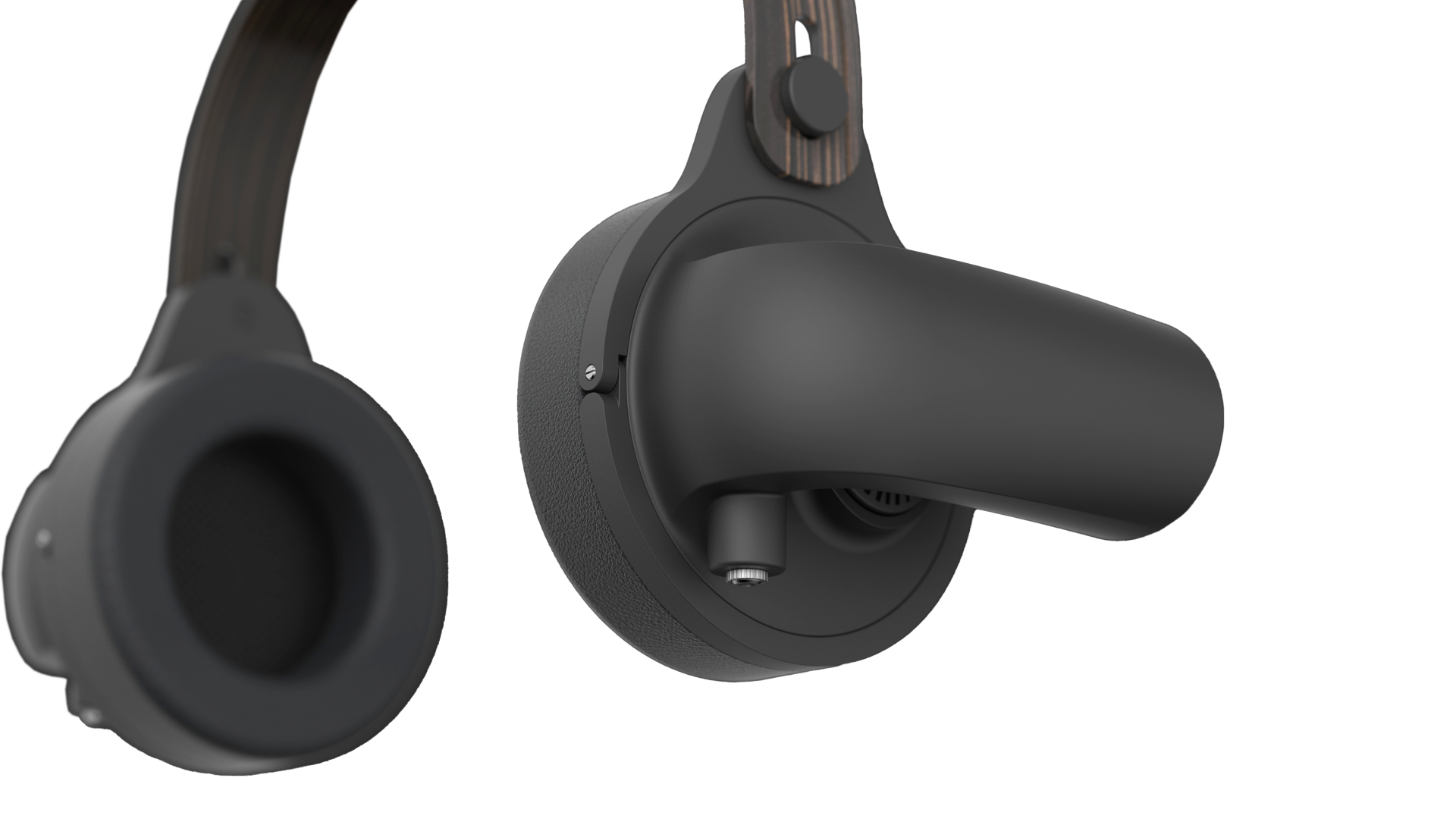
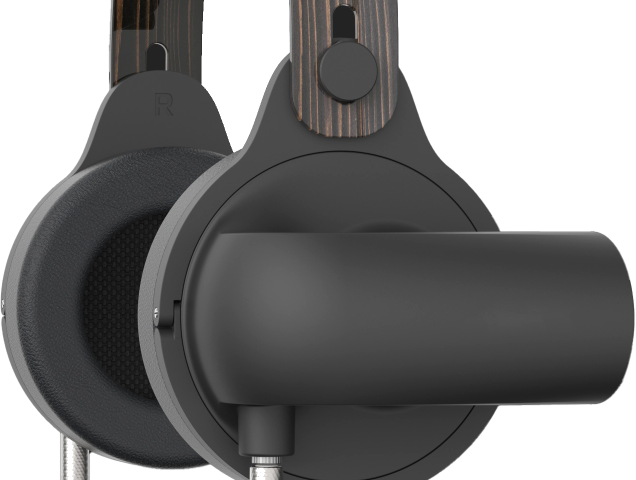
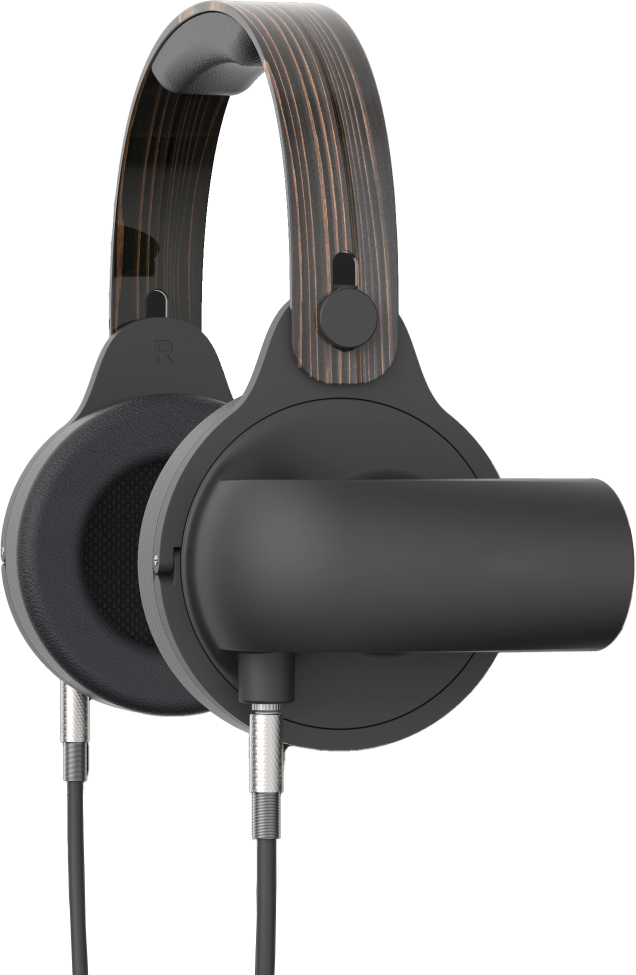
TSL is refreshingly honest that the Reference Prototype v1.0 is built from off-the-shelf parts: a standard headband, generic ear pads, budget-grade 40mm dynamic drivers. The Waveguide Combiner is 3D-printed in photopolymer resin, and the Correction Circuit is designed to be adjustable so the team can tune by ear. This transparency is commendable — they’re not pretending this is a final product.
TSL claims that across multiple test environments (Quad Artera Solus / Rega Io amplifiers, Primare SC-15 DAC, as well as standard desktop and laptop sound cards), the DDTS prototype significantly outperforms traditional headphones in several areas: frontal soundstage imaging, better instrument separation, and reduced long-term listening fatigue. It supports CD, Hi-Res, DSD, and even low-bitrate streaming — broad compatibility. However, it’s worth noting — these are all subjective claims from the manufacturer’s own testing; there are no third-party independent reviews to verify them yet.
📋 Known Specifications
💡 Kaia’s Product Designer Take
💡 Kaia’s Product Designer Take
From a product designer’s perspective, TSL has chosen one of the hardest but most interesting paths. Passive acoustic crossfeed isn’t entirely new — the Jecklin Float used a physical baffle, the AKG K1000 used open-angled drivers — but the dual driver per ear + 3D-printed waveguide combination is genuinely uncommon.
A fully passive approach in a 2026 market dominated by DSP is a double-edged sword. The upside: zero latency, no ADC/DAC losses, universal source compatibility — you could run it off a turntable + tube amp and get the same acoustic crossfeed effect. The downside: no firmware updates, no way to manually adjust crossfeed intensity (unlike Apple Spatial Audio’s head-tracked personalization). Once the waveguide design is finalized, the soundstage characteristics are locked in.
The biggest unknown remains manufacturing feasibility. 3D-printed photopolymer resin waveguides work at the prototype stage, but tolerance control and cost at production scale is an entirely different challenge. The budget-grade 40mm drivers also don’t represent the final sound quality — if higher-end drivers are used, maintaining consistency between the two drivers in the DDTS system becomes the critical test.
Overall, TSL represents a return to hardware-first thinking — in an era dominated by algorithms and DSP, someone still willing to solve the fundamental problem through physical acoustics deserves respect. But the distance from concept to consumer product is often longer than the journey from zero to concept.
✅❌ Pros & Cons
Worth Watching
- Audiophiles pursuing frontal soundstage and precise instrument imaging
- Traditionalists who reject DSP processing and insist on pure analog signal paths
- DIYers and designers interested in headphone acoustic technology
- Industry observers curious whether a physical acoustic solution can challenge DSP dominance
No Rush
- Consumers who want to buy an off-the-shelf product right now (mass production is a long way off)
- Users who prefer lightweight, portable headphones (dual-driver design may be heavier)
- Users who need adjustable DSP crossfeed or head-tracking features
- Buyers with high expectations for brand track record and after-sales support
🏟 Exhibition Info
| 📍 Show | HIGH END Vienna 2026 |
| 📅 Dates | June 4–7, 2026 |
| 🏢 Venue | Austria Center Vienna (ACV) |
| 🏳️ Booth | Level -2, Foyer-D01 (Start-Up Area) |
🏁 Summary
True Stereo Labs DDTS is one of the rare pure hardware-think entrants in recent years — in an era dominated by algorithms and DSP, they’ve chosen to solve headphones’ most fundamental soundstage problem through physical acoustics. The concept is clear, the technical documentation is transparent, and they’re honest about the prototype stage’s limitations (built with off-the-shelf parts, no production timeline) — all of which builds basic trust in the team.
That said, the execution gap between proof-of-concept and mass production is very real — production tolerances for 3D-printed waveguides, dual-driver consistency control, and whether the final acoustic performance can surpass top-tier DSP crossfeed solutions (like the SPL Phonitor Matrix, or Audeze’s built-in DSP found in the Audeze MM-520 also debuting at the show) — these are all open questions to watch.
A hardware solution to the traditional headphone soundstage dilemma — whether DDTS can become the next breakthrough in high-end headphones depends entirely on execution from prototype to production. Definitely worth tracking long-term.
❓ FAQ
How is DDTS different from traditional headphones?
Traditional headphones have only one driver per side, playing a single channel (left ear hears left channel, right ear hears right channel), causing the soundstage to “collapse” inside your head. DDTS has two drivers per earcup — the primary driver plays the native channel, while the secondary driver plays the contralateral channel after amplitude/phase correction — mixed through the Waveguide Combiner to recreate the natural acoustic crossfeed you’d hear from speakers, aiming to move the soundstage from “inside your head” to “in front of you.”
Does DDTS require DSP or special source gear?
No. DDTS is a fully passive solution — the Correction Circuit is a passive amplitude + phase network requiring absolutely no digital processing. In theory, any source — from a phone’s 3.5mm output to a desktop DAC/amp — will work. This is the biggest difference from DSP crossfeed solutions like SPL Phonitor Matrix or Waves Nx.
When will TSL DDTS headphones launch? What’s the price?
There is currently no production timeline. TSL is at the prototype v1.0 stage, actively seeking technology licensing and OEM partnerships. Pricing is TBA, but is expected to target the mid-to-high-end headphone price bracket. The brand’s business model leans more toward technology platform licensing rather than necessarily launching their own consumer product.
How is DDTS different from Apple Spatial Audio?
These are completely different approaches. Apple Spatial Audio is DSP-based — using algorithms to simulate surround sound with dynamic head-tracking, requiring specific hardware and software support. DDTS is a purely passive acoustic solution that achieves crossfeed at the physical acoustic level (not the digital level) — no head tracking, no personalization, but the advantages are zero latency, no specific source requirements, and no batteries needed.
Where can I demo TSL DDTS headphones?
Currently TSL is only exhibiting the Reference Prototype v1.0 at the HIGH END Vienna 2026 Start-Up Area (Level -2, Foyer-D01). After the show, check the TSL website (truestereolabs.com) for any public demo events or retail partnerships. At this stage, the product remains a development prototype with no retail channels.
📖 Further Reading
- HOXIT AUDIO V1 — Slovak Hand-Built Modular Planar Headphones @ HIGH END Vienna 2026 Start-Up Area
- Klipsch Atlas HP-2 / HP-3 Headphones High End Vienna 2026 European Debut — 80th Anniversary Return to the High-End Headphone Market
- Audeze MM-520 Professional Monitoring Headphones HIGH END Vienna 2026 Debut — SLAM Technology Inside
⚠️ The above information is based on the HIGH END Vienna 2026 on-site showcase and brand briefing. As of June 12, 2026, publicly and independently verifiable media coverage and official website documentation remain limited. The product is still in the prototype stage, and actual specifications, pricing, and launch timelines are subject to subsequent official announcements.
🔗 More Info
🛒 Official Website: True Stereo Labs — The concert hall, on your head.
📧 Contact: truestereolabs@gmail.com