 Product News
• 🎧 LETSHUOER unveils its definitive flagship, the Sonata — the earlier EJ10 prototype graduates to a full production model
• ⚙️ 10 drivers per side, tri-brid: 2×8mm DD (isobaric push-pull) + 4×Knowles BA + 4×Sonion EST
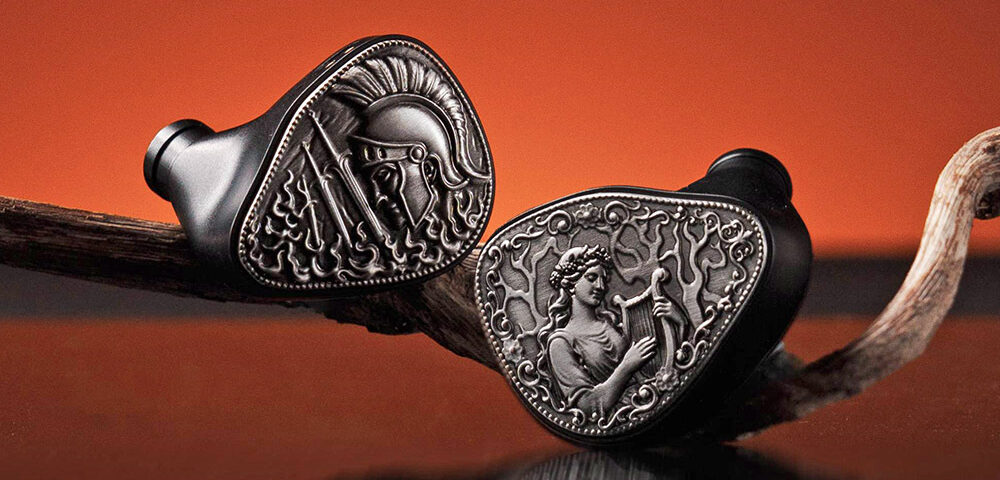
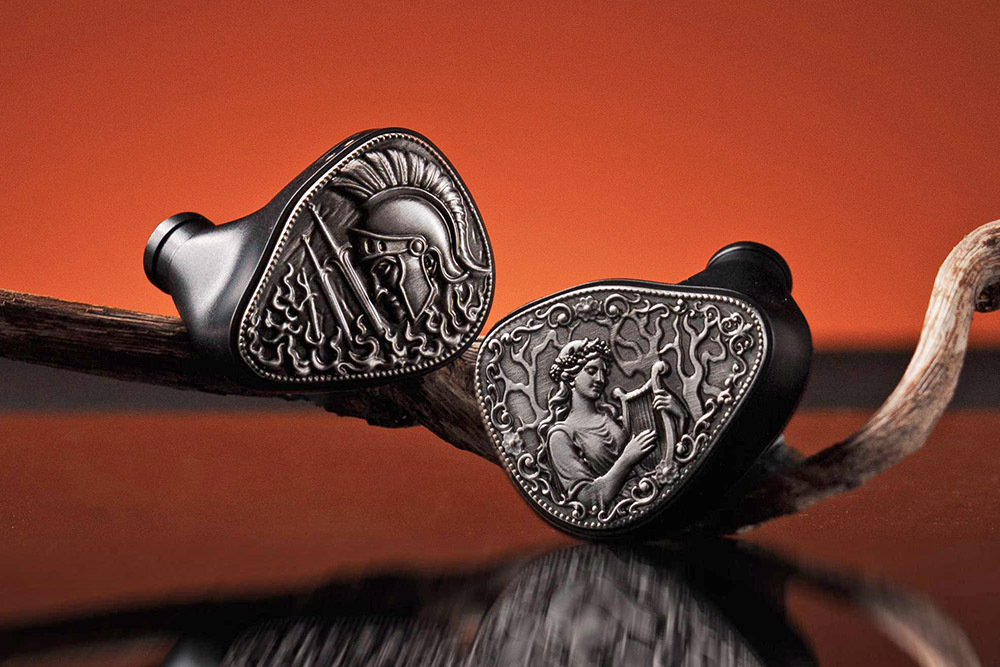
• 🎨 CNC titanium alloy shells + silver-plated brass faceplates engraved with Greek mythology themes — “String” the harp goddess and “Armor” the armored warrior
• 🔊 Balanced, high-density, versatile all-rounder tuning — described by TDS as “the most normal-sounding reference flagship”
• 💰 China: ¥14,999 RMB (~US$2,070) | Japan: ¥396,000 (~HK$20,500 / ~US$2,640) | Hong Kong reference price: HK$16,999 (~US$2,180)
📝 From EJ10 to Sonata: Eight Years of Engineering Integration
LETSHUOER traces its roots to the Shuoer Acoustics R&D team founded in 2016. In its early years, the team primarily provided ODM solutions for international brands, specializing in electrostatic, balanced armature, and dynamic driver hybrid technologies. The company formally launched its own brand in 2021 and has since released a string of well-regarded IEMs — from the entry-level planar-magnetic S12 series to the mid-to-high-end EJ lineup. After eight years of accumulated expertise, the brand has finally delivered its definitive ultra-flagship: the Sonata.
The Sonata’s predecessor — the EJ10 — had been circulating in the Head-Fi community as a prototype as early as 2025, where some reviewers already described it as “the most normal-sounding flagship.” After nearly a year of refinement, the production Sonata moves further toward a balanced tuning while retaining the EJ10’s core architecture: a 10-driver tri-brid configuration with 2 dynamic drivers + 4 balanced armatures + 4 electrostatic drivers — making it the highest-positioned and most ambitiously priced product in the brand’s history.
It’s worth noting that the Sonata takes a fundamentally different technical path from other ultra-flagships on the market — such as the Meze Audio ARTA, which pursues a 225Ω ultra-high-impedance planar route. LETSHUOER instead opts for a multi-driver hybrid architecture to achieve wide-band high resolution, rather than the more common single large-driver or pure-BA stacking approach. This choice reflects the brand’s years of hard-won confidence in hybrid driver crossover technology.
⚙️ Core Technology: Isobaric Push-Pull Dual Dynamic Drivers + 4 Independent Acoustic Tubes
The Sonata’s most noteworthy technical highlight is its low-frequency architecture. Two 8mm dynamic drivers are arranged in an isobaric push-pull configuration — placed face-to-face and driven in sync, using an isobaric chamber to improve acoustic efficiency while reducing distortion. While this design is common in loudspeaker systems, implementing it inside an IEM-scale micro-chamber demands exceptionally precise assembly and crossover tuning.
LETSHUOER claims this design delivers bass that is “deep-reaching without bloat, impactful without bleeding into the mids and highs.” Judging from TDS and Head-Fi reviews, the Sonata’s bass is indeed not basshead-oriented — fast, highly controlled, and dense, closer to a reference-monitor style of low-frequency presentation.
The midrange and highs are handled by 4 Knowles balanced armature drivers, emphasizing vocal texture and instrumental placement precision. The ultra-high frequencies are entrusted to 4 Sonion electrostatic drivers, extending to 40kHz and delivering airiness and high-frequency detail. Four independent acoustic tubes are hand-assembled, working alongside a 3-way electronic crossover — the goal being to suppress phase interference, achieve natural frequency-band transitions, and deliver a holographic soundstage presentation.
One point to note: the Sonata has an impedance of 22Ω and sensitivity of 102dB — on paper, not difficult to drive. However, multiple reviewers point out that it needs a source of sufficient quality to truly shine. A basic smartphone direct connection may not adequately power the EST drivers; a mid-to-high-end USB DAC dongle or DAP is recommended at minimum.
🎨 Design & Build: Titanium × Greek Mythology
The Sonata’s shells are machined from titanium alloy using 5-axis CNC — lightweight, high-rigidity, and effective at suppressing unwanted resonances. The body contour follows an ergonomic, CIEM-inspired shape — on the larger side, best suited for users with medium-to-large ears. The TDS review advises against side-sleeping with them in.
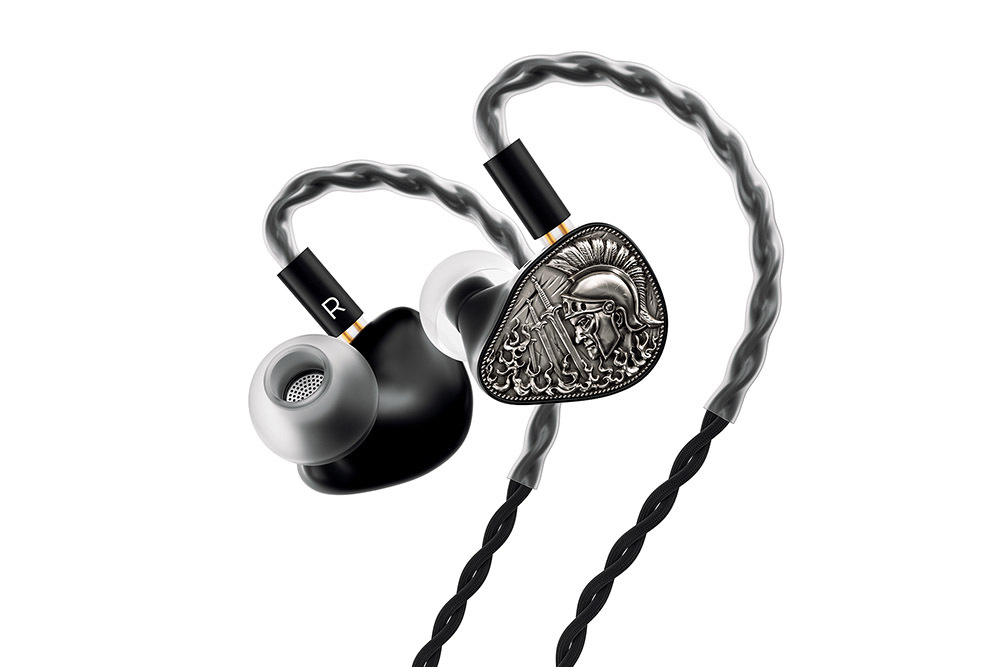
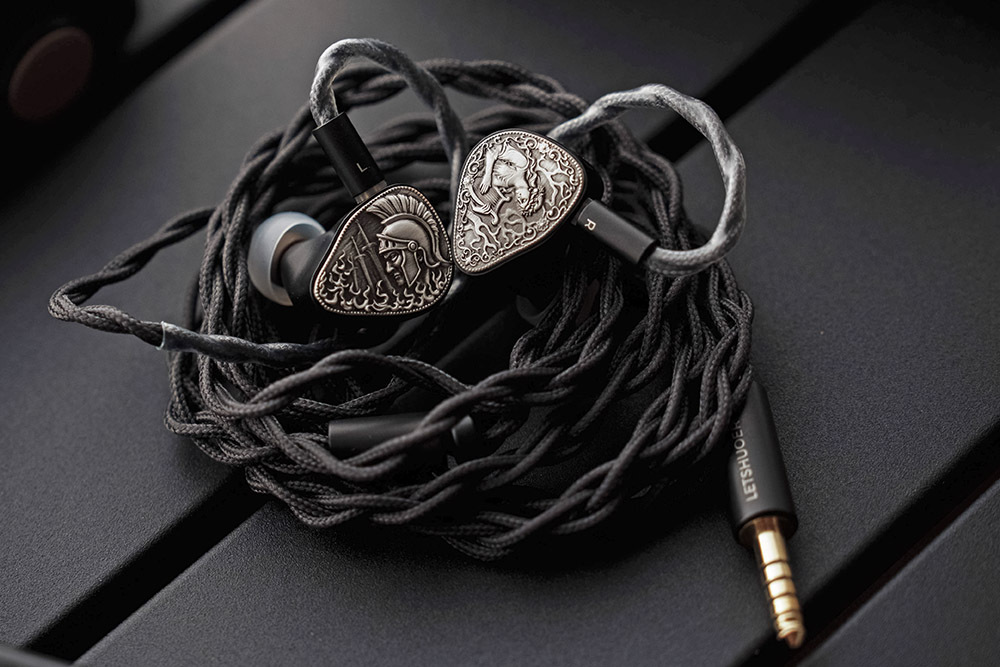
But the real eye-catcher is undoubtedly the faceplate design. The silver-plated brass faceplates feature Greek-mythology-themed relief engravings, different on each side: the right earpiece, “String,” symbolizes love and the arts — a goddess playing a harp, surrounded by branches and foliage. The left earpiece, “Armor,” symbolizes peace and the journey — an armored warrior wearing a plumed helmet and holding a sword. The brand describes this “string and armor” duality as a symphony of protection and healing, tension and harmony.
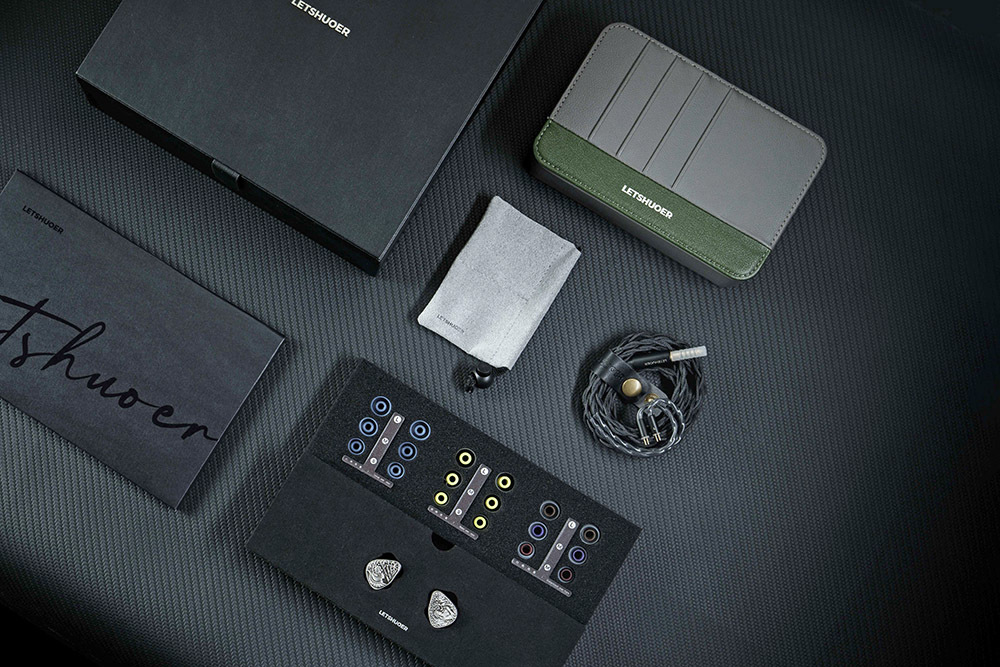
The packaging is equally lavish: a calfskin outer + Ultrasuede inner carrying case, 9 pairs of ear tips (in three tuning orientations: vocal, bass, balanced), and a stock cable featuring an OCC + silver-plated copper hybrid Litz structure (280 cores), native 4.4mm balanced termination, and 0.78mm 2-pin detachable connectors. Cable length is approximately 1.3m.
🎵 Sound Signature: Balanced, High-Density, All-Rounder
Synthesizing the TDS Review (Zhihu) and multiple Head-Fi EJ10 reviews, the Sonata’s sound can be summed up in three keywords: balanced, high-density, and versatile.
Bass — high density, full and rounded, with moderate speed and a touch of decay. It’s neither the fast-attack-fast-release “sheet metal” type, nor the bloated basshead type — it’s closer to a “strong presence that never steals the show.” TDS describes it as “one of the few flagships that can maintain low-end weight while preserving midrange and treble clarity.”
Midrange — vocals are intimate, with a slightly larger mouth size, delivering a naturally neutral-warm timbre. Detail retrieval is strong without being artificially sharpened. One Head-Fi user even claimed the Sonata/EJ10’s female vocal performance “beat out even the mighty Storm.” Male vocals carry body and weight, never sounding thin.
Treble — the 4 Sonion EST drivers are integrated remarkably smoothly, with ample extension and no harshness. Air and spaciousness are excellent, but brightness never goes over the top — suitable for long listening sessions without fatigue.
Soundstage & Separation — a full, slightly flattened spherical soundstage, with excellent separation between instruments and vocals. TDS describes it as “lateral width less prominent than depth, but the overall holographic feel meets expectations for the >¥10,000 price bracket.”
Overall, the Sonata is an exceptionally omnivorous flagship — Pop, Jazz, Acoustic, and Rock perform best, while high-BPM electronic music fares slightly weaker (speed is not its strongest suit). If you had to sum it up in one sentence: it’s a daily-drivable flagship that finds an excellent balance between technical precision and musicality.
📋 Technical Specifications
💰 Pricing & Availability
The Sonata is now available in the Chinese market, priced at ¥14,999 RMB (~US$2,070). In Japan, it will officially launch on June 19, 2026, at ¥396,000 (tax included, ~HK$20,500 / ~US$2,640), distributed by NAIKOM. The Hong Kong reference price is approximately HK$16,999 (~US$2,180). Interested users should check with local dealers for actual availability and audition arrangements.
In the ultra-flagship landscape, the Sonata is positioned at a “flagship entry ticket” price point — significantly more affordable than summit-fi models like the NE4 or STORM, but slightly above mainstream high-end IEMs such as the ThieAudio Monarch MK4 or Sony IER-Z1R. For users wanting to experience a tri-brid flagship without committing to the absolute summit, this price point holds definite appeal.
❓ FAQ
What is the LETSHUOER Sonata’s positioning in the market?
The Sonata is LETSHUOER’s top-of-the-line flagship IEM, featuring a 10-driver tri-brid hybrid architecture (2DD + 4BA + 4EST). It is positioned as a versatile reference-grade flagship suitable for all-genre listening.
How does the Sonata differ from the earlier EJ10 prototype?
The EJ10 was the Sonata’s prototype, circulating in the Head-Fi community as early as 2025. The production Sonata retains the same 10-driver architecture but features a more balanced tuning — the prototype reportedly leaned toward the low-mids, while the production version is more neutral and versatile.
How much does the Sonata cost in Hong Kong, and where can I audition it?
The Hong Kong reference price is approximately HK$16,999 (~US$2,180). Interested users should check with local dealers for actual availability and audition arrangements.
Is the Sonata hard to drive? Can a smartphone handle it?
The Sonata has an impedance of 22Ω and sensitivity of 102dB — on paper, not difficult to drive. However, multiple reviewers note that a quality source is needed to fully unleash the electrostatic drivers’ potential. A mid-to-high-end USB DAC dongle or DAP is recommended at minimum; a smartphone direct connection may not fully drive them.
What music genres does the Sonata excel with?
The Sonata is a highly versatile flagship — Pop (Mandarin, Cantonese, J-Pop, K-Pop, Western), Jazz, Acoustic, and Rock perform best. High-BPM electronic music (such as Drum & Bass, Hardstyle) fares relatively less prominently, as speed is not its strongest attribute.
📖 Further Reading
🔗 More Info
📰 Original Report: PHILE WEB — LETSHUOER “Sonata”: Top-Flight Tri-Brid IEM with Titanium Shell and 10 Drivers
📰 Chinese Review: TDS Review — LETSHUOER Sonata Hybrid Driver IEM Experience
🛒 Official Website: LETSHUOER Official Website